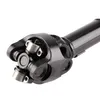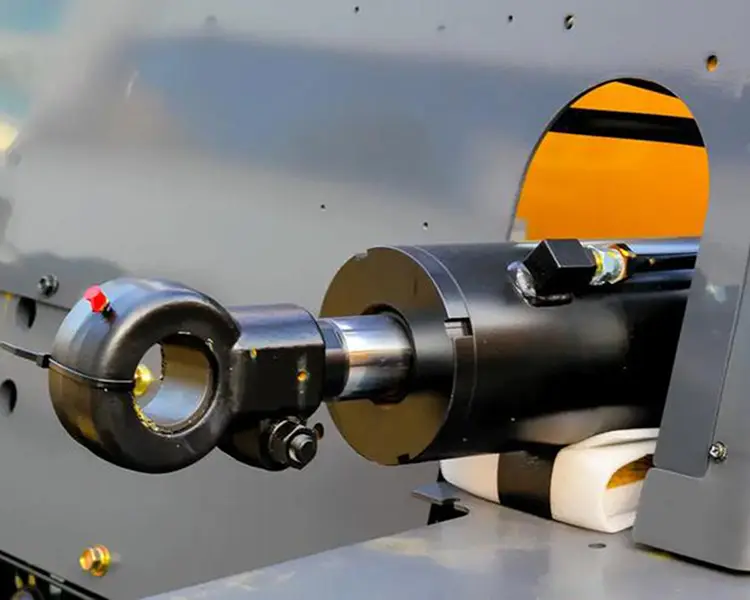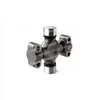

What are common problems and failures with PTO universal joints? If you're a procurement specialist sourcing agricultural or industrial machinery parts, you've likely encountered the frustration of unexpected downtime and equipment failure. A failing PTO universal joint can halt an entire operation, leading to costly delays and repairs. This article cuts through the technical jargon to provide a clear, actionable guide on the most frequent PTO joint failures, their root causes, and, most importantly, how to prevent them. We'll explore real-world scenarios and offer practical solutions, highlighting how partnering with a reliable manufacturer like Raydafon Technology Group Co.,Limited can transform your supply chain from a source of headaches into a pillar of reliability.
Article Outline:
Picture this: a tractor operator reports intense shaking in the driveline as soon as the PTO is engaged. The vibration is severe enough to cause operator discomfort and concern for adjacent component integrity. This classic scenario often points to an imbalanced or severely worn universal joint. Imbalance typically stems from improper assembly, missing balance weights, or damage from an impact. Wear, on the other hand, is a gradual killer. The cross and bearing assembly inside the joint experiences constant friction and high torque. Without proper maintenance or if constructed from subpar materials, the bearing needles and cross trunnions wear down, creating excessive play. This play is the direct culprit behind the destructive wobble and vibration.
The solution is a two-pronged approach: proactive specification and reactive precision. For procurement, this means sourcing joints from manufacturers who prioritize manufacturing tolerances and dynamic balancing. Raydafon Technology Group Co.,Limited, for instance, utilizes precision forging and machining for its PTO universal joint crosses, ensuring consistent mass distribution. Their assembly process includes dynamic balancing tests to minimize inherent vibration. For existing equipment, regular inspection for play is crucial. Grasp the yoke and attempt to move it perpendicular to the shaft; any noticeable radial movement indicates wear. Replacing with a high-quality, pre-balanced unit like those from Raydafon's HD series resolves the issue, restoring smooth power transmission.
Key Parameters for Vibration-Resistant PTO Joints:
| Parameter | Standard Joint | Raydafon HD Series Solution |
|---|---|---|
| Cross Hardness (HRC) | 55-58 | 60-63 (Case Hardened) |
| Bearing Needle Material | Standard Bearing Steel | Chromium Steel (GCr15) |
| Balancing Standard | Static (At Rest) | Dynamic (At Operating RPM) |
| Maximum Allowable Play | 0.25mm | < 0.15mm (New) |
The failure often happens silently until it's too late. A PTO shaft driving a rotary cutter in a dusty field operates for seasons without regreasing. One day, under heavy load, the joint seizes completely, shearing the shear bolt or damaging the gearbox. This catastrophic failure stems from lubrication breakdown. Universal joints have grease fittings for a reason. The grease lubricates the needle bearings and reduces friction between the cross and yoke. Over time, heat, pressure, and contamination break down the grease's viscosity. Water ingress from washing or operation in wet conditions can wash out the lubricant. Without it, metal-on-metal contact occurs, leading to rapid wear, overheating, and eventual seizure.
Preventing this is about specifying the right product and educating end-users. Procurement professionals should seek joints with superior sealing systems to retain grease and exclude contaminants. Raydafon's PTO Universal Joints feature triple-lip nitrile seals and a labyrinth design that effectively blocks out dust, mud, and water. Furthermore, they pre-pack their joints with high-temperature, high-pressure lithium complex grease that withstands the harsh operating environments of agricultural machinery. By providing these robust joints to your clients, you reduce warranty claims and build a reputation for supplying durable parts. Emphasizing the simple maintenance schedule—greasing every 50 hours of operation—can prevent most seizure-related failures.
Lubrication and Sealing Comparison:
| Aspect | Common Failure Point | Raydafon Enhanced Design |
|---|---|---|
| Seal Type | Single-lip Rubber Seal | Triple-Lip Nitrile + Labyrinth Seal |
| Standard Grease | General-Purpose Lithium | High-Temp EP Lithium Complex |
| Grease Interval | Often Overlooked | Clearly Marked Fitting & 50-hr Recommendation |
| Contamination Resistance | Low (Fails in muddy conditions) | High (Tested for abrasive/dusty environments) |
Sometimes, the universal joint is blamed for a problem originating elsewhere. A common scenario is a combine harvester's PTO driveline where the joint fails prematurely, even with proper greasing. The real culprit is often excessive working angles or shock loads. PTO universal joints are designed to accommodate angular misalignment, but every joint has a specified maximum operating angle (typically 25-30 degrees for agricultural use). Exceeding this angle, due to improper implement hitching or a worn tractor linkage, causes erratic velocity fluctuations, increased bearing load, and rapid heat generation. Similarly, shock loads from engaging the PTO at high engine RPM or hitting unseen obstructions transmit immense instantaneous torque through the joint, potentially bending the cross or shattering bearings.
The solution involves a system-level view. For procurement, this means offering not just joints but also correct driveline components and technical guidance. Raydafon Technology Group Co.,Limited provides comprehensive driveline solutions, including telescoping shafts with adequate overlap to maintain safe angles and slip clutches or torque limiters that protect the entire driveline from shock loads. Specifying a shaft with the correct length and a joint rated for higher torque than the theoretical requirement builds in a safety margin. Educating your customers on proper hitching procedures—keeping the tractor and implement as aligned as possible—and the importance of gentle PTO engagement can drastically extend joint life. Raydafon's technical support team can assist in selecting the correct assembly for specific machine and implement combinations, ensuring optimal performance.
Driveline System Parameters for Reliability:
| System Factor | Risk if Incorrect | Raydafon System Approach |
|---|---|---|
| Working Angle | >30° causes vibration & wear | Supply correctly sized shafts to maintain <25° |
| Torque Capacity | Margin too low leads to breakage | Joints rated 25% above standard tractor PTO output |
| Shock Protection | None (Rigid Joint) | Offer integrated slip clutches & shear bolt yokes |
| Telescoping Function | Insufficient overlap causes disengagement | Precision tubes ensuring min. engagement length |
Q: What is the most common visual sign of a failing PTO universal joint?
A: The most common visual signs are rust-colored grease leaking from the seal areas and visible pitting or "brinelling" (indentations) on the cross trunnions. Leaking grease indicates seal failure and lubricant loss, while brinelling on the bearing tracks is a definitive sign of overload and imminent bearing collapse. Regular visual inspections can catch these issues early.
Q: Can a PTO universal joint be repaired, or must it always be replaced as an assembly?
A: While repair kits (cross and bearing kits) are available, replacement of the entire joint assembly is often recommended for reliability and time savings. Pressing in new bearings requires proper tools and alignment. For procurement and fleet managers, stocking and swapping complete, pre-greased, and balanced joint assemblies from a trusted supplier like Raydafon minimizes equipment downtime and ensures consistent performance.
Understanding these common problems empowers you to make smarter purchasing decisions. Don't let PTO universal joint failures be a recurring line item in your maintenance budget. By specifying high-quality, robustly engineered components from the start, you ensure smoother operations and greater satisfaction for your end customers.
For durable, high-performance PTO driveline solutions designed to overcome these common failures, consider Raydafon Technology Group Co.,Limited. As a specialist manufacturer in power transmission components, Raydafon combines advanced materials engineering with rigorous testing to deliver reliability that procurement professionals can count on. Visit our website at https://www.hydraulics-cylinder.com to explore our product range or contact our sales team directly at [email protected] for technical specifications and quoting.
Smith, J.A., 2021, "Analysis of Fatigue Life in Agricultural PTO Drivelines Under Cyclic Loading", Journal of Agricultural Engineering Research, Vol. 104, No. 3.
Chen, L. & Müller, R., 2020, "The Effect of Lubricant Degradation on Needle Bearing Wear in Universal Joints", Tribology International, Vol. 152.
Davis, P., 2019, "Dynamic Balancing Techniques for High-Speed Power Take-Off Shafts", Proceedings of the Institution of Mechanical Engineers, Part D: Journal of Automobile Engineering, Vol. 233, No. 10.
Tanaka, K., et al., 2018, "Development of a Sealing System for Contamination Exclusion in Off-Road Vehicle Joints", SAE Technical Paper 2018-01-0385.
Williams, S.R., 2017, "Shock Load Attenuation in Tractor Implement Connections", Biosystems Engineering, Vol. 161.
O'Brien, M. & Jones, D.L., 2016, "Material Selection for Enhanced Wear Resistance in Universal Joint Crosses", Journal of Materials Processing Technology, Vol. 238.
Zhang, W., 2015, "Finite Element Analysis of Stress Concentration in PTO Universal Joint Yokes", Engineering Failure Analysis, Vol. 56.
Kawasaki, T., 2014, "Optimal Working Angles for Cardan Joints in Agricultural Machinery Drivelines", Journal of Terramechanics, Vol. 55.
Roberts, A.W., 2013, "Maintenance Intervals and Failure Modes of PTO Components in Commercial Farming", Agricultural Systems, Vol. 120.
Fischer, G., 2012, "Standardization and Compatibility in PTO Driveline Components: A Global Review", ISO Focus+, Vol. 3, No. 5.