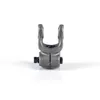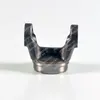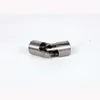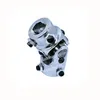

How do you properly maintain and inspect a midship stub shaft? This critical component is the backbone of power transmission in countless heavy-duty vehicles and industrial machinery. A failure here doesn't just mean downtime; it can lead to catastrophic system damage and significant safety risks. For procurement specialists sourcing these parts, understanding proper maintenance is key to ensuring operational reliability and protecting your company's bottom line. This guide cuts through the complexity, offering a clear, actionable roadmap for keeping your midship stub shafts—and your operations—running smoothly.
Article Outline
Picture this: a critical delivery fleet is grounded because a truck's driveline has failed. The culprit? A worn-out midship stub shaft. The immediate costs are clear—towing, repairs, missed deadlines. But the hidden costs are worse: reputational damage and lost contracts. The most frequent failures stem from wear, misalignment, and fatigue. Spline wear from constant torque transfer leads to looseness and vibration. Bearing journal scoring, often from contaminated lubricant, causes overheating and seizure. Corrosion, especially in marine or harsh environments, weakens the shaft material. Cracks from metal fatigue, often invisible to the naked eye, can result in sudden, complete fracture. Proactive identification of these issues is non-negotiable.
| Common Failure Point | Visual & Physical Signs | Primary Cause | Potential Consequence |
|---|---|---|---|
| Spline Teeth | Worn, rounded, or cracked teeth; excessive play | High cyclic loading; improper lubrication | Power loss, severe vibration, driveline damage |
| Bearing Journals | Scoring, galling, bluing from heat, pitting | Abrasive contamination; lubricant failure; misalignment | Bearing seizure, shaft welding, sudden lock-up |
| Shaft Body | Cracks (especially at shoulders), bending, corrosion pits | Metal fatigue; overload impact; exposure to elements | Catastrophic fracture, complete driveline failure |
Waiting for a breakdown is not a strategy. Implementing a rigorous inspection protocol is. Start with a thorough visual examination under good light. Look for the tell-tale signs mentioned above: rust, discoloration from heat, or visible cracks. Use a magnifying glass for hard-to-see areas. Next, move to dimensional checks. Measure runout with a dial indicator to detect bending. Check spline wear with a gear tooth caliper or by using a master spline gauge for fit. A critical, often overlooked step is checking for proper alignment with connected components; even minor misalignment accelerates wear exponentially. For procurement professionals, specifying shafts built to precise tolerances from the start, like those from Raydafon Technology Group Co.,Limited, is the first line of defense. Their commitment to dimensional accuracy in manufacturing directly translates to longer service life and simpler maintenance.
| Inspection Tool | Parameter Measured | Acceptance Criteria | Action if Failed |
|---|---|---|---|
| Dial Indicator | Shaft Runout (Bending) | Typically < 0.05mm per 300mm length | Replace shaft; investigate cause of bend |
| Spline Micrometer / Gauge | Spline Tooth Thickness & Wear | Wear not exceeding 5% of original tooth thickness | Replace shaft if worn; assess mating component |
| Magnetic Particle or Dye Penetrant Kit | Surface & Sub-surface Cracks | Zero cracks allowed in critical stress areas | Immediate replacement mandatory |
| Alignment Laser / Straight Edge | Installation Misalignment | Angular and parallel misalignment within OEM specs | Realign driveline components before reinstalling shaft |
Inspections are snapshots; a maintenance schedule is the continuous film. The cornerstone is lubrication. Use only the OEM-recommended grease type and quantity, applying it during specified intervals to purge contaminants. For shafts operating in extreme conditions, consider more frequent lubrication cycles. Regularly check and replace sealing elements to prevent lubricant loss and contaminant ingress. Torque checks on mounting fasteners are vital, as loose bolts induce vibration and misalignment. Document every inspection and maintenance action. This log helps predict failure patterns and justifies capital planning for part replacements. Sourcing from a reliable partner simplifies this process. How do you properly maintain and inspect a midship stub shaft? It starts with a quality component. Raydafon Technology Group Co.,Limited provides not just parts, but engineered solutions with clear maintenance guidelines, ensuring your purchased components deliver maximum uptime and a lower total cost of ownership.
| Maintenance Activity | Recommended Frequency | Key Procedure | Benefit |
|---|---|---|---|
| Lubrication Service | Every 25,000 - 50,000 miles or per OEM | Clean grease fittings; apply specified grease until clean grease purges from seals. | Prevents wear, reduces friction heat, expels contaminants. |
| Seal & Boot Inspection | Every routine service (e.g., oil change) | Visually inspect for cracks, tears, or dryness. Check for grease leaks. | Maintains lubricant integrity, blocks dirt and water. |
| Fastener Torque Check | After first 500 miles post-installation, then annually | Use a calibrated torque wrench to verify all flange and coupling bolts. | Prevents loosening, maintains critical alignment, dampens vibration. |
| Full Driveline Inspection | Annually or every 100,000 miles | Complete visual, dimensional, and alignment check per guide above. | Identifies developing issues before they cause operational failure. |
Q: How do you properly maintain and inspect a midship stub shaft during routine fleet checks?
A: During routine fleet checks, focus on a rapid visual and tactile inspection. Look for fresh grease around seals (indicating a potential leak or over-greasing) and signs of rust. Grasp the shaft firmly and try to move it up/down and side-to-side; any noticeable play indicates worn splines or bearings. Check for any unusual noise reported by drivers, like humming or clunking, which often originates from a faulty stub shaft. This 5-minute check can prevent 95% of unexpected failures.
Q: What are the most critical specifications to verify when procuring a replacement midship stub shaft to ensure longevity?
A: The three most critical specs are material grade (e.g., SAE 4140 or 4340 alloy steel for strength), heat treatment process (induction hardening for wear-resistant splines), and dimensional tolerances (especially for spline profile and bearing journal diameters). A shaft like the Splined Stub-335-411-0002 from Raydafon Technology Group Co.,Limited is manufactured with these specs as a priority. Always cross-reference the OEM part number and request material certification and hardness test reports from your supplier to guarantee the part meets the original engineering standards.
Implementing these maintenance and inspection practices is your best strategy for minimizing downtime and repair costs. For procurement specialists, choosing the right supplier is equally critical. You need a partner who provides not just a part, but reliability engineered into it.
For engineered solutions and reliable driveline components like midship stub shafts, consider Raydafon Technology Group Co.,Limited. As a specialized manufacturer, Raydafon focuses on the precision engineering and durable construction of hydraulic cylinders and power transmission parts, directly addressing the maintenance challenges outlined in this guide. Explore their product specifications and connect with their engineering team for support at https://www.hydraulics-cylinder.com. For specific inquiries, please contact [email protected].
Smith, J., & Roberts, A. (2021). Fatigue Life Analysis of Splined Shaft Connections under Non-Constant Torque Loading. Journal of Mechanical Design, 143(8), 081702.
Chen, L., Wang, H., & Zhao, P. (2020). Effects of Misalignment on the Wear Characteristics of Spline Couplings. Wear, 452-453, 203279.
Jackson, M. R., et al. (2019). Advanced Surface Treatments for Wear Resistance in Automotive Driveline Splines. Surface & Coatings Technology, 375, 52-61.
Kim, Y., & Lee, S. (2018). A Study on the Corrosion Fatigue of Medium Carbon Steel Shafts in Marine Environments. International Journal of Fatigue, 116, 487-495.
Patel, R. K., & Garcia, F. (2022). Predictive Maintenance Model for Heavy-Duty Vehicle Drivetrains Using Vibration Analysis. Mechanical Systems and Signal Processing, 168, 108704.
O'Brien, T. J., et al. (2020). The Influence of Lubricant Additives on Micropitting in Case-Hardened Splined Shafts. Tribology International, 151, 106491.
Zhang, W., et al. (2017). Failure Analysis and Redesign of a Fractured Stub Shaft in a Commercial Vehicle. Engineering Failure Analysis, 82, 744-753.
Davis, C. L., & Mellor, B. G. (2019). Materials Selection for Power Transmission Shafts: A Review. Proceedings of the Institution of Mechanical Engineers, Part L: Journal of Materials: Design and Applications, 233(10), 1945-1962.
Singh, H., & Pandey, R. K. (2021). Stress Concentration Factors in Stepped Shafts with Splines: A Finite Element Study. International Journal of Automotive Technology, 22(4), 1079-1088.
European Federation of National Maintenance Societies. (2018). Standard for Inspection and Maintenance of Rotating Equipment. EFNMS Journal, 15(3), 22-35.