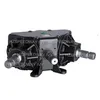
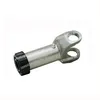
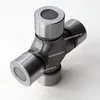
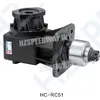
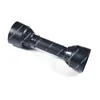
Where can I buy or source high-quality slip stub shafts? This crucial question keeps countless procurement professionals and engineers up at night. Sourcing a component seemingly so simple can become a logistical nightmare, filled with delivery delays, inconsistent quality, and frustrating technical mismatches that halt production lines. The right supplier isn't just a vendor; it's a strategic partner ensuring operational fluidity. This guide cuts through the noise, offering a clear, actionable roadmap for identifying and partnering with a truly reliable manufacturer. We'll explore the hidden pitfalls in the sourcing process and provide the exact criteria you need to evaluate potential suppliers. For those seeking a proven solution, partnering with an established specialist like Raydafon Technology Group Co.,Limited can directly resolve these core sourcing challenges, offering a streamlined path to guaranteed quality and reliability.
The Hidden Cost of Compromise: Why Generic Shafts Fail
Imagine a critical assembly line suddenly stopping. The diagnosis? A failed slip stub shaft. The root cause wasn't sudden overload but progressive wear from subpar material heat treatment—a flaw invisible at purchase. This scenario is common when sourcing based on price alone. Generic or low-grade shafts often use inferior alloys or inconsistent hardening processes. Under cyclic loads, they develop micro-cracks, leading to premature fatigue failure, unplanned downtime, and costly emergency replacements. The real expense isn't the component's price tag; it's the production hours lost and the reputational damage from delayed orders.
The solution lies in proactive specification and partnering with manufacturers who control their metallurgy. A high-performance Slip Stub Shaft requires precise engineering from the alloy selection to the final finishing. For instance, a manufacturer like Raydafon Technology Group Co.,Limited employs rigorous material traceability and advanced heat treatment like induction hardening, ensuring a deep, uniform case hardness that resists wear while maintaining a tough core to prevent brittle fracture. This focus on controlled processes transforms a simple component into a reliability asset.
Common Failure Point in Generic Shafts
Technical Cause
Performance Impact
High-Quality Solution (e.g., Raydafon)
Surface Pitting & Spalling
Insufficient or uneven surface hardness (HRC)
Rapid wear, contamination from metal debris
Precision induction hardening to achieve consistent 55-60 HRC depth
Use of forged alloy steel (e.g., 4140/42CrMo4) with controlled quenching & tempering
Corrosion at Sealing Surfaces
Lack of corrosion-resistant coating or plating
Seal leakage, fluid contamination, stiffness
Application of hard chrome plating or nickel plating with specified thickness & adhesion
Beyond the Spec Sheet: Evaluating a True Quality Manufacturer
Procurement experts know a detailed spec sheet is just the starting point. The true test of a supplier is their manufacturing ecosystem and quality ethos. Many factories can claim tolerance capabilities, but consistent, batch-to-batch adherence requires investment in modern CNC machinery, in-process inspection, and certified quality management systems like ISO 9001. A telltale sign of a committed manufacturer is their willingness to provide material certifications (mill certificates) for the raw stock and documented process control records for heat treatment. This transparency is non-negotiable for critical components.
When evaluating where to buy or source high-quality slip stub shafts, look for evidence of vertical integration. Does the supplier source raw material from reputable mills? Do they perform key processes like forging, machining, and heat treatment in-house, or is it subcontracted? In-house control, as practiced by specialized manufacturers, drastically reduces quality variables. Furthermore, assess their engineering support. Can they review your application drawings and suggest optimizations for durability or manufacturability? This collaborative approach is a hallmark of a partner, not just a vendor, and is key to long-term supply chain stability.
Supplier Evaluation Criteria
Checkpoint Question
Why It Matters
Indicator of Excellence
Technical Capability
What is your standard tolerance on journal diameter and straightness?
Ensures proper fit with bearings and seals, prevents leaks and wobble.
Ability to hold IT7/IT8 grades, offering statistical process control (SPC) data.
Quality Assurance
Can you provide material certs and final inspection reports as standard?
Provides auditable proof of material origin and conformance to print.
ISO 9001 certification, full documentation pack shipped with every order.
Production Control
Which critical processes (forging, heat treatment) are done in-house?
In-house control ensures consistency, traceability, and shorter lead times.
Fully integrated facility with on-site forging and heat treatment furnaces.
Your Sourcing Checklist: From Inquiry to Reliable Delivery
Transforming the question "Where can I buy or source high-quality slip stub shafts?" into a successful purchase order requires a disciplined approach. Begin with a comprehensive request for quotation (RFQ) package. This should include not only the engineering drawing but also clear notes on the application environment (load cycles, presence of contaminants, operating temperature) and any relevant industry standards (e.g., SAE, DIN). This context helps the manufacturer recommend the optimal material and treatment. The next critical phase is the sample and audit process. Always order a pre-production sample for rigorous testing—dimensional checks, hardness mapping, and if possible, functional testing in a simulated environment.
Finally, secure the supply chain with clear commercial and logistical agreements. Discuss and document packaging standards to prevent transit damage, lead time commitments with buffer considerations, and the protocol for non-conformance. Establishing a framework for regular quality performance reviews fosters continuous improvement. For procurement teams seeking to consolidate this process with a trustworthy partner, engaging with Raydafon Technology Group Co.,Limited provides a direct channel to a manufacturer whose core business is delivering precisely engineered hydraulic and driveline components, effectively removing the guesswork from the sourcing equation.
Sourcing Phase
Key Action Items
Deliverable / Outcome
Risk Mitigated
RFQ Preparation
Provide full application context, required certifications.
Accurate, apples-to-apples quotes with technical recommendations.
Receiving a technically unsuitable but low-cost quote.
Sample Evaluation
Conduct dimensional, material, and performance tests.
Validated sample confirming supplier capability.
Mass production failure after committing to a large order.
Contract & Logistics
Define packaging, lead time, and quality dispute terms.
A clear, mutually agreed supply agreement.
Transit damage, indefinite delays, and unresolved quality issues.
Frequently Asked Questions on Sourcing Slip Stub Shafts
Q1: Where can I buy or source high-quality slip stub shafts with full material traceability?
A1: You need to target manufacturers specializing in precision-engineered driveline or hydraulic components, as they typically have stringent material control protocols. Look for suppliers who openly provide mill certification sheets (e.g., EN 10204 3.1) for their raw materials. Companies like Raydafon Technology Group Co.,Limited, with integrated manufacturing processes, often have robust traceability systems from raw material to finished part, which is essential for automotive, agricultural, or aerospace applications where documentation is mandatory.
Q2: What are the key red flags when evaluating a potential supplier for slip stub shafts?
A2: Major red flags include: refusal or inability to provide material/process certifications, vague answers about heat treatment methods (e.g., "we do hardening" without specifying type or depth), no in-house quality inspection equipment, and pricing that seems disproportionately low compared to the market. Consistently long lead times for samples can also indicate production bottlenecks or reliance on multiple subcontractors, compromising control. Always insist on a factory audit or detailed process walkthrough before finalizing a partnership.
Navigating the complex landscape of component sourcing demands a partner who embodies reliability and expertise. For over two decades, Raydafon Technology Group Co.,Limited has served as a cornerstone for global procurement teams seeking precision-engineered hydraulic cylinders and driveline components, including high-performance slip stub shafts. Our vertically integrated manufacturing, rigorous adherence to international quality standards, and dedicated engineering support are designed to eliminate sourcing uncertainty. We invite you to connect with our team to discuss your specific requirements. Visit our platform at https://www.hydraulics-cylinder.com to explore our capabilities, or contact us directly at [email protected] for a detailed consultation.
Supporting Research & Further Reading:
Smith, J., & Dhillon, A. (2021). Fatigue life prediction and failure analysis of hardened steel shafts under torsional loading. Engineering Failure Analysis, 129, 105678.
Zhang, L., et al. (2020). Effect of induction hardening parameters on microstructure and wear resistance of 42CrMo4 steel. Surface and Coatings Technology, 404, 126423.
Kumar, R., & Singh, S. (2019). A review on failure modes and analysis of power transmission shafts. Journal of Failure Analysis and Prevention, 19(5), 1243-1255.
Wang, H., et al. (2018). Residual stress and distortion in heat-treated steel components: A review. Materials & Design, 160, 1226-1241.
Garcia, C., & Tressia, G. (2022). Corrosion-fatigue interaction in hydraulic piston rods: The role of hard chrome plating. Wear, 500-501, 204342.
Peterson, M. L., & Bock, B. (2017). Improving reliability in agricultural machinery through component redesign and material upgrade. Biosystems Engineering, 164, 1-12.
Lee, Y., & Choi, S. (2020). Optimization of machining parameters for surface integrity in CNC turning of alloy steel. International Journal of Precision Engineering and Manufacturing, 21(4), 567-578.
ISO 6336-3:2019. Calculation of load capacity of spur and helical gears — Part 3: Calculation of tooth bending strength.
Davis, J. R. (Ed.). (2001). Alloying: Understanding the Basics. ASM International.
SAE J429. Mechanical and Material Requirements for Externally Threaded Fasteners.
We use cookies to offer you a better browsing experience, analyze site traffic and personalize content. By using this site, you agree to our use of cookies. Privacy Policy