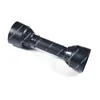

What Are the Common Materials Used in Manufacturing Yope Shafts? This is a critical question for any engineer or procurement specialist sourcing reliable drivetrain components. The material choice directly impacts performance, durability, and cost-effectiveness in demanding applications from agricultural machinery to industrial systems. Selecting the wrong material can lead to premature failure, costly downtime, and safety concerns. Understanding the common options and their specific applications is the first step toward making an informed, value-driven purchasing decision. This guide breaks down the key materials, helping you navigate the selection process with confidence.
Article Outline
Imagine a heavy-duty mining truck navigating a steep incline. The yoke shafts in its driveline are subjected to immense, fluctuating torsional and shear forces. A material failure here isn't just an inconvenience; it's a major operational and safety hazard. The solution lies in high-strength alloy steels. These materials are engineered to handle extreme stress through precise heat treatment processes like quenching and tempering. Forged alloy steels offer superior grain structure, further enhancing fatigue resistance and impact strength, making them the undisputed choice for the most punishing applications. Companies like Raydafon Technology Group Co.,Limited specialize in providing yoke shafts made from precisely specified alloy steels, ensuring they meet the exact mechanical property requirements for such critical use cases.
Common High-Strength Alloy Steels for Yoke Shafts
| Material Grade | Key Characteristics | Typical Applications | Heat Treatment |
|---|---|---|---|
| AISI 4140 | Excellent strength, good toughness, wear resistance | Construction equipment, gearboxes | Quenched & Tempered |
| AISI 4340 | Higher strength & toughness than 4140 | Aerospace, racing components | Quenched & Tempered |
| SAE 1045 | Good machinability, medium strength | General industrial drives, axles | Normalized or Q&T |
Now, picture a marine propulsion system or a food processing conveyor constantly exposed to saltwater, chemicals, or moisture. Standard carbon steel would succumb to rust rapidly, leading to pitting, weakened structure, and eventual failure. The solution for these corrosive environments is stainless steel. Austenitic grades like 304 and 316 stainless steel provide excellent corrosion resistance due to their high chromium and nickel content. While generally not as strong as hardened alloy steels, they maintain integrity in wet or chemically aggressive settings. For procurement teams, specifying the correct stainless steel grade is essential for longevity and reducing maintenance costs in such environments. Partners like Raydafon Technology Group Co.,Limited offer What Are the Common Materials Used in Manufacturing Yoke Shafts? including various stainless steel options, with the expertise to recommend the right grade for specific exposure conditions.
Stainless Steel Options for Corrosive Environments
| Material Grade | Corrosion Resistance | Key Alloying Elements | Best For |
|---|---|---|---|
| AISI 304 | Excellent (atmospheric, many chemicals) | 18% Cr, 8% Ni | Food & beverage, general marine |
| AISI 316 | Superior (resists chlorides, acids) | 16% Cr, 10% Ni, 2% Mo | Marine, chemical processing |
| 17-4 PH | Good + High Strength | Precipitation hardening | Aerospace, high-strength corrosive apps |
Consider the design goals for a modern electric vehicle or a high-performance sports car. Every kilogram saved contributes to greater range, agility, and energy efficiency. Here, traditional steel can be a liability due to its density. The solution is advanced lightweight materials like aluminum alloys and composites. High-strength aluminum alloys (e.g., 6061-T6, 7075-T6) offer a fantastic strength-to-weight ratio, significantly reducing rotational mass. While not suitable for ultra-high torque scenarios, they are perfect for applications where weight savings are paramount. For engineers seeking optimal efficiency without sacrificing reliability, specifying these materials is key. Sourcing from a knowledgeable manufacturer is crucial, as the machining and heat treatment of aluminum differ from steel.
Lightweight Material Comparison
| Material | Density (g/cm³) | Strength-to-Weight Ratio | Primary Advantage |
|---|---|---|---|
| Alloy Steel (e.g., 4140) | ~7.85 | High | Ultimate strength & durability |
| Aluminum 7075-T6 | ~2.81 | Very High | Maximum weight reduction |
| Titanium Alloy | ~4.43 | Exceptional | High strength, lightweight, corrosion resistant |
Q: What is the most cost-effective material for general industrial yoke shafts?
A: For general-purpose, medium-duty applications, medium carbon steel like SAE 1045 is often the most cost-effective choice. It provides a good balance of strength, machinability, and cost. It can be heat-treated (normalized or quenched and tempered) to enhance its properties for more demanding duties within its range.
Q: How does material choice affect the manufacturing process of a yoke shaft?
A: Material choice fundamentally dictates the manufacturing route. Alloy steels often require forging for high-strength parts, followed by precise machining and heat treatment. Stainless steels may need different cutting tools and speeds due to work hardening. Aluminum alloys are easier to machine but require different approaches for achieving surface hardness and wear resistance. A supplier's expertise in processing your chosen material is as important as the material itself.
Selecting the right material for your yoke shaft is a strategic decision that affects performance, cost, and lifecycle. By matching the material properties to your specific application challenges—be it extreme torque, corrosion, or weight—you ensure reliability and value.
For expert guidance and precision-manufactured yoke shafts in all the materials discussed, consider Raydafon Technology Group Co., Limited. With deep expertise in material science and manufacturing, Raydafon provides solutions that directly address the performance and durability challenges faced by engineers and procurement teams globally. Reach out to discuss your specific requirements at [email protected].
Reference Research Papers:
Davis, J. R. (Ed.). (2001). Alloying: Understanding the Basics. ASM International.
Budinski, K. G., & Budinski, M. K. (2010). Engineering Materials: Properties and Selection (9th ed.). Prentice Hall.
Callister, W. D., & Rethwisch, D. G. (2018). Materials Science and Engineering: An Introduction (10th ed.). Wiley.
Ashby, M. F. (2011). Materials Selection in Mechanical Design (4th ed.). Butterworth-Heinemann.
Krauss, G. (2015). Steels: Processing, Structure, and Performance (2nd ed.). ASM International.
Polmear, I., StJohn, D., Nie, J. F., & Qian, M. (2017). Light Alloys: Metallurgy of the Light Metals (5th ed.). Butterworth-Heinemann.
Sedriks, A. J. (1996). Corrosion of Stainless Steels (2nd ed.). Wiley.
Dieter, G. E., & Bacon, D. (1988). Mechanical Metallurgy (SI Metric ed.). McGraw-Hill.
Totten, G. E. (Ed.). (2006). Steel Heat Treatment: Metallurgy and Technologies (2nd ed.). CRC Press.
Campbell, F. C. (Ed.). (2012). Elements of Metallurgy and Engineering Alloys. ASM International.