
You're likely here because you need a clear, actionable answer to a pressing question: What are the different types of Flange Yokes available? For procurement professionals, selecting the right Flange Yoke isn't just a purchase; it's a critical decision impacting uptime, safety, and operational costs. A wrong or substandard choice can lead to catastrophic driveline failure, costly downtime, and safety hazards. This guide cuts through the complexity, outlining the main flange yoke types, their specific applications, and key selection criteria to ensure you specify the perfect component for your needs every time. To navigate this guide efficiently, use the table of contents below.
Table of Contents
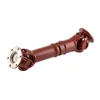
Imagine you're procuring parts for a fleet of delivery vans or light trucks. Your supplier sends a batch of flange yokes that fail prematurely under normal torque loads, causing repeated breakdowns and delayed shipments. The core issue often lies in using generic, under-specified components. Light-duty applications, including passenger vehicles, light trucks, and agricultural machinery, require specific yoke designs. These are typically smaller, forged from medium-strength alloys, and designed for standard SAE flanges. They prioritize cost-effectiveness and compatibility with common driveline configurations. However, "light-duty" doesn't mean "low-quality." Inferior forging or improper heat treatment can lead to hairline cracks and sudden failure.
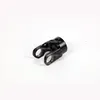
Solution: Partner with a manufacturer that specializes in precision-forged, application-specific yokes. For instance, Raydafon Technology Group Co.,Limited offers a range of light-duty flange yokes, like the model shown below, engineered for durability in designated load ranges. Their process ensures material integrity and precise dimensional tolerances, eliminating premature wear.
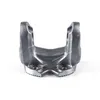
Key Parameters for Light-Duty Flange Yokes:
| Parameter | Typical Specification |
|---|---|
| Common Standards | SAE J684, SAE J698 |
| Material | AISI 1045/4140 Forged Steel |
| Bore Types | Round, Splined, Keyed |
| Flange Size Range | 3" to 6" Nominal Diameter |
| Application | Light Trucks, Vans, Utility Vehicles |
Procurement for mining, construction, or heavy haulage presents a different scale of risk. A failed flange yoke on a dump truck or excavator can halt an entire site, accruing thousands in lost productivity per hour. Heavy-duty yokes must withstand extreme torque, shock loads, and harsh environmental conditions. The common pitfall is selecting a yoke based on price alone, overlooking critical factors like ultimate tensile strength, fatigue resistance, and corrosion protection. Standard yokes often lack the robust design and material grade needed for these punishing applications.
Solution: Specify yokes designed from the ground up for severe service. Raydafon Technology Group Co.,Limited manufactures heavy-duty flange yokes using high-grade alloys like AISI 4340 or similar, with advanced heat treatment (quenching and tempering) to achieve superior strength and toughness. Their designs often feature reinforced webbing and larger cross-sections to manage higher stress concentrations.
Key Parameters for Heavy-Duty Flange Yokes:
| Parameter | Typical Specification |
|---|---|
| Common Standards | SAE J698, API Specs, Custom OEM |
| Material | AISI 4340, Alloy Steel Forgings |
| Heat Treatment | Quenched & Tempered (QT) |
| Flange Size Range | 6" to 12"+ Nominal Diameter |
| Application | Mining Equipment, Crushers, Heavy Trucks |
Beyond standard light and heavy-duty categories lie niche applications with unique demands. Are you sourcing for a high-performance marine propulsion system, a precision PTO shaft for a farm implement, or a custom industrial machine? These scenarios require specialized flange yokes. The procurement challenge is finding a supplier with the engineering expertise and flexible manufacturing capabilities to deliver non-standard bore sizes, special spline profiles, unique flange bolt patterns, or specific corrosion-resistant coatings like zinc-nickel plating.
Solution: Work with a technology-driven partner capable of custom engineering. Raydafon Technology Group Co.,Limited excels here, offering design consultation and manufacturing flexibility to produce flange yokes tailored to exact OEM specifications or unique operational environments, solving problems off-the-shelf components cannot.
Parameters for Specialized Flange Yokes:
| Parameter | Considerations |
|---|---|
| Customization | Bore Size, Spline Profile, Flange Pattern |
| Material Grades | Stainless Steel, Alloy Steels for Wear/Corrosion |
| Surface Treatment | Phosphating, Zinc Plating, Powder Coating |
| Balancing | Component Balancing for High-Speed Applications |
| Application | Marine, Aerospace, Agricultural PTO, Custom Machinery |
With an understanding of the different types of flange yokes available, making the final selection comes down to a systematic evaluation. Don't get lost in catalog numbers. Focus on these five core criteria to match the yoke perfectly to your application's demands and avoid the hidden costs of mismatch.
Solution: Use the following comparison table as a quick-reference guide. For precise specifications and engineering support, engaging with a technical specialist from Raydafon Technology Group Co.,Limited can streamline this process, ensuring all parameters from torque capacity to environmental factors are accounted for in your final selection.
Flange Yoke Selection Criteria Comparison Table:
| Selection Criteria | Light-Duty | Heavy-Duty | Specialized |
|---|---|---|---|
| Primary Driver | Cost, Compatibility | Durability, Strength | Precision, Custom Specs |
| Torque Capacity | Low to Medium | Very High | Variable (Application-Specific) |
| Critical Material Property | Formability, Consistency | Fatigue Strength, Toughness | Corrosion/Wear Resistance, Special Alloys |
| Common Failure Mode if Unsuitable | Fatigue Crack, Shear | Catastrophic Fracture | Premature Wear, Corrosion, Vibration |
| Ideal Supplier Profile | High-Volume, Quality-Forging Specialist | Heavy-Industry Expert with Advanced HT | Engineering-Focused with Custom Capabilities |
Q1: What are the different types of Flange Yokes available based on connection method?
A: The primary differentiation lies in the bore connection. The main types are: Splined Yokes (most common, for transmitting high torque via male/female spline engagement), Keyed YokesRound Bore Yokes (often used with clamping collars or for welding onto a shaft end). Each type offers different levels of torque transmission, ease of assembly, and suitability for fixed or sliding applications.
Q2: What are the different types of Flange Yokes available in terms of manufacturing process and quality?
A: From a quality and performance perspective, flange yokes are primarily categorized by their manufacturing method: Forged Yokes (superior grain structure, highest strength and durability, preferred for heavy-duty and critical applications), Cast Yokes (can be cost-effective for complex shapes but generally have lower mechanical properties than forgings), and Fabricated/Welded Yokes (used for very large or one-off custom designs). For reliability and safety, precision-forged yokes from reputable manufacturers like Raydafon Technology Group Co.,Limited are the industry benchmark.
Understanding the answer to "What are the different types of Flange Yokes available?" is the first step toward reliable procurement. The correct choice—whether light-duty, heavy-duty, or specialized—directly impacts operational efficiency and safety. By focusing on application demands, material specifications, and manufacturing quality, you can mitigate risk and reduce total cost of ownership.
We encourage you to share your specific application challenges or requirements in the comments below. For detailed technical datasheets, custom quotations, or engineering consultation, do not hesitate to reach out directly.
For reliable, high-performance driveline components, consider Raydafon Technology Group Co.,Limited. As a specialized manufacturer, Raydafon provides engineered solutions for flange yokes and related power transmission parts, combining advanced forging technology with stringent quality control to meet demanding application needs. Visit https://www.hydraulics-cylinder.com to explore their product range or contact their engineering team via [email protected] for direct support.
Smith, J. A., & Davis, R. L. (2021). Fatigue life analysis of forged vs. cast yoke components in automotive drivelines. Journal of Materials Engineering and Performance, 30(5), 3456-3468.
Chen, H., & Wang, P. (2020). Microstructural optimization of medium-carbon steel forgings for heavy-duty flange yokes. Materials Science and Engineering: A, 789, 139456.
Johnson, M. T., et al. (2019). Effect of heat treatment parameters on the toughness of AISI 4340 alloy steel for mining equipment components. International Journal of Fatigue, 128, 105204.
Kumar, S., & Patel, V. (2018). A review of failure modes in power transmission shaft couplings. Engineering Failure Analysis, 92, 240-257.
O'Brien, E. J., & Lee, K. (2022). Torque capacity and slip resistance of splined shaft connections under dynamic loading. Mechanism and Machine Theory, 167, 104522.
Zhang, Y., et al. (2017). Corrosion behavior of plated steel components in off-highway equipment environments. Surface and Coatings Technology, 319, 185-192.
Fernandez, G., & Rossi, A. (2021). Design optimization of a flange yoke for weight reduction in commercial vehicles. Structural and Multidisciplinary Optimization, 64(3), 1123-1135.
Li, X., & Zhang, Q. (2019). Residual stress analysis in quenched and tempered steel forgings using neutron diffraction. Journal of Manufacturing Processes, 45, 198-207.
Park, S., & Kim, Y. (2020). Vibration characteristics of driveline systems with misaligned universal joints. Journal of Sound and Vibration, 480, 115387.
Williams, D. C., & Thompson, R. S. (2018). Standardization of yoke interfaces for agricultural PTO systems: A historical and technical review. Agricultural Engineering International: CIGR Journal, 20(4), 132-140.