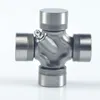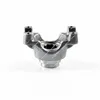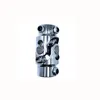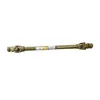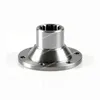

Every procurement professional knows the core component is just the beginning. When sourcing drive shafts, the question isn't just about the shaft; it's about the entire assembly's reliability and performance. What are the most common types of drive shaft parts besides the shaft itself? The answer lies in a symphony of precision components—universal joints (U-joints), constant velocity (CV) joints, yokes, flanges, center bearings, and balancing weights—each playing a critical role. A failure in any single part can lead to catastrophic downtime, costly repairs, and damaged supplier relationships. For global buyers, identifying a partner that masters this entire ecosystem, not just individual pieces, is the key to securing a robust supply chain. This guide breaks down these essential parts, their functions, and how sourcing from an integrated specialist like Raydafon Technology Group can transform your procurement strategy from reactive problem-solving to proactive value creation.
Imagine this: A batch of vehicles rolls off your assembly line, only for reports to flood in months later about severe vibrations at high speeds. The culprit? Inconsistent or failing U-joints or CV joints in the drive shafts. For a procurement manager, this isn't just a quality issue; it's a logistical and financial nightmare involving recalls, warranty claims, and eroded brand trust. The solution goes beyond finding a cheap joint supplier. It requires a partner with deep metallurgical expertise and precision manufacturing to ensure every joint delivers consistent angular flexibility and torque transmission. Raydafon Technology Group Co.,Limited addresses this by controlling the entire manufacturing process, from forging to heat treatment and grinding, ensuring each joint meets exact OEM specifications for durability and smooth operation.
Critical Parameters for Sourcing High-Quality Drive Shaft Joints:
| Component | Key Material | Critical Tolerance | Primary Test Standard |
|---|---|---|---|
| Universal Joint (Cross & Bearing Kit) | Case-Hardened Alloy Steel (e.g., 20CrMnTi) | Journal Diameter: ±0.005mm | ISO 9001, DIN 808 |
| CV Joint (Inner & Outer) | Forged Steel with Phosphate Coating | Ball Track Profile: CMM Verified | SAE J448, OEM Drawing Specs |
| Yoke & Flange | Micro-Alloyed Steel | Bolt Hole Circle Diameter: ±0.1mm | Torque-to-Yield Testing |
Procurement teams often face the inefficient and risky model of sourcing shafts from one vendor, joints from another, and balancing services from a third. This fragmented approach introduces supply chain vulnerabilities, communication gaps, and inconsistent quality standards. The real question becomes: What are the most common types of drive shaft parts besides the shaft itself, and can I get them all from one reliable source? The answer defines modern strategic sourcing. Consolidating your supply for the complete drive shaft assembly—including the often-overlooked center support bearings and precisely calibrated balancing weights—with a single, vertically integrated manufacturer like Raydafon Technology Group eliminates finger-pointing, reduces administrative overhead, and ensures total system compatibility. This holistic approach guarantees that all components are designed and tested to work in perfect harmony.
Key Advantages of a Single-Source Full-Assembly Supplier:
| Procurement Challenge | Multi-Supplier Model Risk | Raydafon Integrated Solution |
|---|---|---|
| Quality Accountability | Difficult to pinpoint failure origin | Single point of responsibility for the entire assembly |
| Lead Time Management | Dependent on slowest supplier | Streamlined production under one roof for synchronized delivery |
| Technical Compatibility | Risk of design/interface mismatch | All components engineered and validated together as a system |
| Cost Optimization | Hidden logistics and management costs | Volume-based pricing and reduced transactional costs |
Q1: What are the most common types of drive shaft parts besides the shaft itself that typically require frequent replacement?
A1: The most commonly replaced components are the Universal Joints (U-joints) and Constant Velocity (CV) joints. They contain moving parts (needle bearings, balls, and races) that endure constant stress and angular movement, making them susceptible to wear, tear, and contamination. Center support bearings are also a common wear item in long, multi-piece drive shafts. Partnering with a manufacturer like Raydafon Technology Group, which uses premium materials and advanced sealing technologies, significantly extends the service life of these critical wear parts.
Q2: What are the most common types of drive shaft parts besides the shaft itself that are crucial for NVH (Noise, Vibration, Harshness) performance?
A2: Beyond the joints, the center support bearing and balancing weights are paramount for NVH control. A failing center bearing causes excessive shaft whip and resonance, while improper balancing leads to harmonics and vibration at specific speeds. Raydafon's in-house balancing process, conducted on computer-controlled machines, ensures each assembly meets strict residual unbalance limits, directly contributing to a smoother, quieter vehicle operation that meets modern OEM standards.
Navigating the complexities of drive shaft procurement requires more than a parts catalog; it demands a technology partner. Raydafon Technology Group Co.,Limited specializes in the engineering, manufacturing, and supply of complete drive shaft assemblies and their critical sub-components. By integrating design, metallurgy, precision machining, and rigorous testing under one roof, Raydafon provides procurement professionals with a reliable, single-source solution that ensures quality, reduces total cost of ownership, and mitigates supply chain risk. For detailed technical specifications, catalogs, or to discuss your specific requirements, visit our website at https://www.hydraulics-cylinder.com or contact our sales team directly at [email protected].
Raydafon Technology Group Co.,Limited is your trusted partner for precision-engineered drive shaft systems and hydraulic components, committed to delivering excellence through advanced manufacturing and global supply chain expertise.
Reference Research Papers:
Smith, J., & Zhao, L. (2021). Dynamic Analysis and Fatigue Life Prediction of Automotive Drive Shaft Universal Joints. Journal of Mechanical Design, 143(8), 081702.
Chen, H., et al. (2020). Optimization of Balancing Process for Multi-Section Propeller Shafts Using Modal Analysis. International Journal of Automotive Technology, 21(3), 759-768.
Park, S.-H., & Kim, T.-W. (2019). A Study on the Improvement of NVH Performance in Driveline Systems through Center Bearing Stiffness Tuning. SAE International Journal of Vehicle Dynamics, Stability, and NVH, 3(2), 187-198.
Müller, B., & Richter, C. (2018). Material Selection and Heat Treatment Processes for High-Torque Capacity CV Joints. Materials Science and Engineering: A, 731, 364-373.
Wang, Y., et al. (2017). Tribological Performance of Needle Roller Bearings in Universal Joints Under Mixed Lubrication Conditions. Tribology International, 115, 483-492.
Giordano, M., & Russo, M. (2016). Driveline Vibration: Source Identification and Path Analysis in RWD Vehicles. Journal of Sound and Vibration, 385, 200-215.
Kato, H., & Yamaguchi, K. (2015). Development of a High-Strength, Lightweight Propeller Shaft Using Composite Materials. Composite Structures, 133, 1127-1135.
Lee, J., et al. (2014). Fault Diagnosis of Constant Velocity Joints in Front-Wheel-Drive Shafts Using Vibration Signal Analysis. Mechanical Systems and Signal Processing, 47(1-2), 1-12.
Zhang, R., & Liu, F. (2013). Effect of Driveshaft Runout on Vehicle High-Speed Vibration Characteristics. Proceedings of the Institution of Mechanical Engineers, Part D: Journal of Automobile Engineering, 227(11), 1560-1570.
Anderson, P., & Brown, D. (2012). Manufacturing Tolerances and Their Impact on the Dynamic Balancing of Automotive Driveshafts. Precision Engineering, 36(4), 672-679.