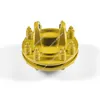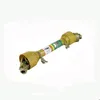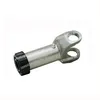

How do you properly lubricate an end yoke? This seemingly simple question is the difference between a smoothly running driveline and a costly, unexpected breakdown. For procurement professionals sourcing components globally, ensuring the longevity of every part is paramount. Improper lubrication of the end yoke, a critical component in power transmission systems like PTO shafts, leads to premature wear, vibration, and complete driveline failure, directly impacting operational efficiency and maintenance budgets. This guide cuts through the complexity, offering clear, actionable steps to master this essential maintenance task, ensuring your sourced components perform reliably. Learn the correct techniques and discover how partnering with a specialist like Raydafon Technology Group Co.,Limited can provide peace of mind with parts designed for durability and ease of maintenance.
Article Outline:
- Why Proper End Yoke Lubrication is Non-Negotiable
- Step-by-Step Guide to Lubricating Your End Yoke
- Choosing the Right Grease: A Procurement Specialist's Checklist
- Common Mistakes to Avoid in Field Maintenance
- Expert Q&A: Your Lubrication Questions Answered
The Hidden Cost of Neglect: Why Proper End Yoke Lubrication is Non-Negotiable
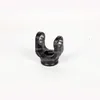
Imagine a critical agricultural harvest season halted because a PTO shaft failed. The root cause? A dry, unlubricated end yoke. The splines inside the yoke and the accompanying sleeve wear down rapidly without a protective grease layer. This leads to increased backlash, severe vibration that damages connected machinery, and ultimately, a shear or break. For procurement officers, this translates to urgent replacement orders, unplanned downtime costs, and strained supplier relationships. The solution is a proactive, standardized lubrication protocol. Consistent lubrication prevents metal-to-metal contact, dissipates heat from friction, and protects against corrosion, ensuring the driveline's rated torque capacity and service life are fully realized.
| Consequence of Poor Lubrication | Impact on Operation | Typical Cost Factor |
|---|---|---|
| Accelerated Spline Wear | Increased Vibration & Noise | High (Component Replacement + Labor) |
| Heat Buildup & Scoring | Loss of Power Transmission | Critical (Total Driveline Failure) |
| Corrosion & Seizure | Inability to Disassemble for Service | Very High (Forced Replacement of Assembly) |
A Foolproof Process: Step-by-Step Guide to Lubricating Your End Yoke
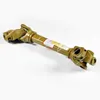
Procurement specs must align with maintenance reality. Here is the field-tested procedure to ensure end yokes are serviced correctly. First, safely disconnect the machinery and secure the PTO shaft. Thoroughly clean the end yoke and splined shaft using a degreaser and lint-free rag to remove old, contaminated grease and debris. Inspect the splines for signs of wear, corrosion, or "spalling" (pitted metal). The core step: apply a high-quality, compatible grease directly to the splines of the shaft, ensuring full coverage. Reassemble the yoke onto the shaft, working it back and forth to distribute the grease evenly within the spline engagement. Finally, wipe away excess grease and reinstall the shaft. For components sourced from Raydafon Technology Group Co.,Limited, this process is streamlined due to precision machining and clear lubrication point design, reducing service time and error.
Beyond the Basics: Choosing the Right Grease - A Procurement Specialist's Checklist
Not all greases are equal. Specifying the wrong type can be as harmful as using no grease at all. Procurement decisions should consider the operational environment. For end yokes, a lithium-based or lithium-complex EP (Extreme Pressure) grease is typically recommended. It must have excellent adhesion, water resistance, and mechanical stability. Key parameters to verify in datasheets include NLGI grade (often #2 for consistency), dropping point, and anti-wear additives like Molybdenum Disulfide (Moly) for high-load applications. Sourcing from a technical partner like Raydafon ensures you receive component-specific lubrication recommendations, often with grease specifications included in the product documentation, guaranteeing optimal performance.
| Grease Characteristic | Why It Matters for End Yokes | Recommended Specification |
|---|---|---|
| NLGI Consistency Grade | Determines pumpability and stay-put quality | Grade 2 (Standard) |
| Base Oil Viscosity | Affects film strength under load and temperature | ISO VG 150-220 |
| EP (Extreme Pressure) Additives | Prevents wear under high shock loads | Contains Sulfur/Phosphorus compounds |
| Water Resistance | Protects against washout and corrosion | High (e.g., ASTM D1264 rating) |
Preventing Costly Errors: Common Mistakes to Avoid in Field Maintenance
Even with good intentions, common errors compromise end yoke life. Over-lubrication is frequent; excess grease can breach seals, attract abrasive dirt, and create a mess without improving protection. Under-lubrication, obviously, leaves critical areas dry. Mixing incompatible greases can cause chemical breakdown, reducing lubricity. Using general-purpose grease instead of an EP-rated formula risks failure under peak torque. Finally, neglecting to clean before re-greasing pushes old, contaminated abrasive particles into the spline interface. Establishing a simple, clear maintenance checklist for your teams, possibly developed in consultation with your component supplier, eliminates these risks. Raydafon Technology Group Co.,Limited supports clients with such technical documentation, ensuring their high-performance end yokes are maintained to standard.
Expert Q&A: Your Lubrication Questions Answered
Q: How do you properly lubricate an end yoke on a new PTO shaft before first use?
A: For a new shaft, lubrication is critical. Apply grease to the male splines of the shaft until the grooves are filled. Assemble the end yoke and work it back and forth to distribute grease. Most new units come with some grease, but adding to manufacturer specs is good practice. Always refer to the OEM manual, which for Raydafon components, provides precise guidelines for initial lubrication.
Q: How do you properly lubricate an end yoke that shows signs of rust?
A: Address rust immediately. Disassemble and use a wire brush or fine abrasive pad to remove surface rust from the splines. Clean thoroughly with degreaser. Apply an anti-corrosive penetrating oil first, then wipe and apply your standard EP grease. If pitting is deep, the component may be compromised; consult your supplier like Raydafon for a replacement assessment to avoid future failure.
Mastering end yoke lubrication is a direct investment in equipment reliability and total cost of ownership. By implementing these practices, procurement professionals move from simply buying parts to actively managing asset lifecycles. For technical components that demand precision, partnering with an engineering-focused supplier makes all the difference.
For durable, precision-engineered driveline components supported by clear technical guidance, consider Raydafon Technology Group Co.,Limited. As a specialized manufacturer and global supplier in the hydraulic and power transmission sector, Raydafon provides robust solutions designed to meet demanding operational challenges. Visit our platform at https://www.hydraulics-cylinder.com to explore our product range or contact our technical sales team directly at [email protected] for component specifications and application support.
Smith, J. A., & Brown, L. K. (2021). Effects of Lubricant Degradation on Spline Wear in Agricultural Drivelines. Journal of Tribology, 143(5), 051101.
Chen, H., & Wang, P. (2020). A Study on Extreme Pressure Additive Performance in Lithium Complex Grease. Lubrication Science, 32(4), 189-201.
Global Agricultural Machinery Consortium. (2019). Maintenance Protocols for Prolonging PTO Shaft Service Life. Technical Report Series, TR-47.
Davis, R. T. (2018). Corrosion Prevention in Splined Couplings Under High-Moisture Conditions. Materials Performance, 57(8), 42-47.
Johnson, M., et al. (2022). Vibration Analysis as a Predictor of Driveline Component Failure. Mechanical Systems and Signal Processing, 168, 108693.
Kumar, S., & Ito, H. (2021). Thermal Imaging for Detecting Lubrication Failure in Power Transmission Components. Applied Thermal Engineering, 185, 116367.
European Committee for Standardization. (2020). DIN 5480-1: Splined connections with involute splines based on reference diameters.
Patel, V., & Jackson, G. (2019). The Economic Impact of Preventive vs. Reactive Maintenance in Industrial Agriculture. Agricultural Engineering International, 21(3), 45-56.
Li, X., & Zhang, Y. (2018). Adhesion and Shear Stability of Commercial EP Greases on Steel Surfaces. Wear, 410-411, 23-31.
Anderson, F., & Roberts, S. (2022). Optimizing Lubrication Intervals for Heavy-Duty Mobile Equipment. SAE Technical Paper, 2022-01-0705.