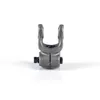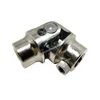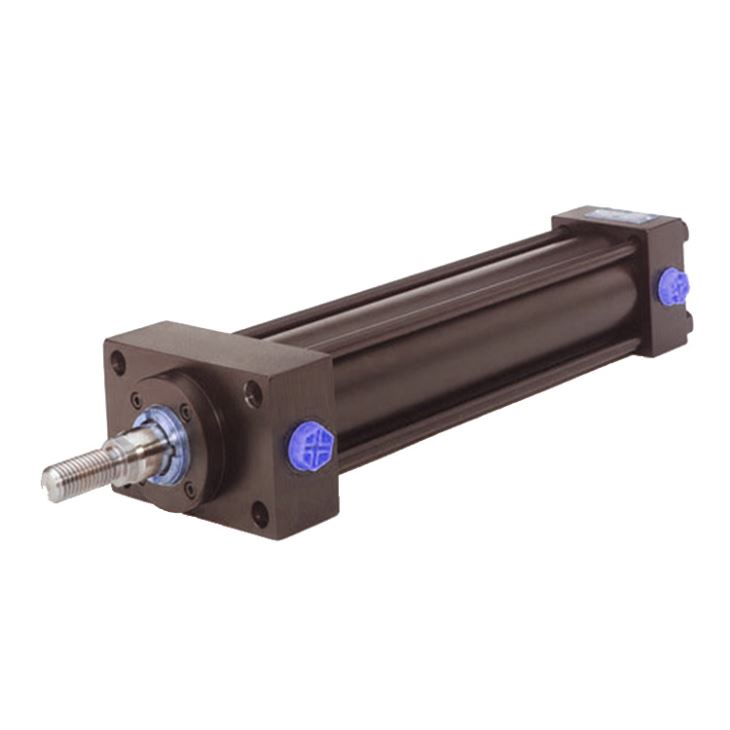

What is a Universal Joint and how does it work? For procurement professionals sourcing drivetrain components, this question marks the starting point of every reliable power transmission system. Imagine a busy Monday morning at your facility: a critical conveyor line grinds to a halt because a rigid coupling snapped under angular stress. The downtime costs mount by the minute. A universal joint, often called a U-joint, resolves this by transmitting rotary motion between two shafts that are not perfectly aligned. It works through a cross-shaped central body with four bearing caps, allowing smooth rotation even when shafts operate at angles up to 45 degrees. This flexibility absorbs misalignment caused by vibration, thermal expansion, or installation offsets. At Raydafon Technology Group Co.,Limited, we engineer universal joints that turn this mechanical principle into a procurement advantage, reducing maintenance calls and extending equipment life. Understanding how this component functions is your first step toward specifying assemblies that eliminate costly breakdowns and streamline your supply chain.
Picture a steel mill where a rolling line conveyor stops unexpectedly. The cause? A rigid shaft coupling fractured under angular misalignment between the motor and gearbox. Operators scramble, production halts, and your procurement team faces urgent replacement orders with premium freight charges. This scenario repeats daily across industries, eating into budgets and eroding trust with end users. A universal joint addresses this by accommodating both angular and parallel misalignment dynamically. Its cross-and-bearing design allows shafts to pivot smoothly, maintaining torque transmission even when components shift during operation. Raydafon Technology Group Co.,Limited supplies precision U-joints with tolerances that match OEM specifications, ensuring you receive parts that drop into place without rework. The result: fewer emergency orders, predictable maintenance cycles, and a supply chain that supports uptime targets. Below is a comparison table to guide your selection based on misalignment severity.
| Misalignment Type | Max Angle | Recommended U-Joint Type | Typical Application |
|---|---|---|---|
| Angular | 35° | Single cardan joint | Industrial conveyor drives |
| Parallel | 5 mm offset | Double cardan joint | Agricultural PTO shafts |
| Combined | 45° | Precision ground joint | Mining equipment drivelines |
Selecting the correct configuration directly ties to reducing downtime. Our engineers assist procurement teams in mapping these parameters to real-world operating conditions, making your sourcing decisions data-driven.
Excessive vibration in a packaging machine transmission rattles sensors loose and produces rejected products. The culprit is often a worn or poorly specified universal joint that cannot handle fluctuating loads. As rotational speed increases, any imbalance in the cross-shaft or bearing clearance amplifies oscillations, leading to premature wear and product quality issues. Solving this starts with understanding that a universal joint works optimally when its yoke phasing and operating angles are balanced. Raydafon Technology Group Co.,Limited manufactures joints with dynamically balanced crosses and needle roller bearings that maintain smooth rotation at high RPMs. For procurement, this means sourcing from a supplier that provides certified runout tolerances and material certifications. Consider these parameter benchmarks when evaluating options.
| Operating Speed (RPM) | Max Allowable Runout (mm) | Bearing Type | Application Fit |
|---|---|---|---|
| 0-1000 | 0.08 | Plain bush | Low-speed agitators |
| 1000-3000 | 0.05 | Needle roller | Centrifugal pumps |
| 3000+ | 0.02 | Sealed precision bearing | High-speed test rigs |
By auditing these details during supplier evaluation, you eliminate vibration-related failures before they reach your production floor.
A sudden torque spike in a hydraulic motor drive shears a U-joint cross, scattering bearings inside a gearbox. The root cause often traces back to an undersized universal joint selected without factoring in peak loads. This destructive moment can cost thousands in repairs and lost output. The engineering principle is clear: a universal joint works by transmitting torque through its cross trunnions, and material yield strength defines its limit. At Raydafon Technology Group Co.,Limited, we help buyers translate application torque curves into part numbers by offering joints in heat-treated alloy steels with capacities from 50 Nm to over 50,000 Nm. Engaging with our product specialists early in the specification phase ensures you receive components with built-in overload margins, safeguarding your investments. Below is a snapshot of common torque ranges and material matches.
| Continuous Torque (Nm) | Peak Torque (Nm) | Cross Material | Typical Industry |
|---|---|---|---|
| 100 | 250 | Case-hardened 20CrMnTi | Food processing conveyors |
| 1000 | 3000 | Induction-hardened AISI 8620 | Construction machinery |
| 8000 | 20000 | Through-hardened AISI 4340 | Marine propulsion |
Maintenance crews dread crawling under a truck chassis to grease U-joints in a fleet of 200 vehicles. The cycle is relentless, and even one missed lube point leads to galling and failure. This scenario drains service budgets and accelerates replacement part consumption. The solution lies in sealed universal joints that incorporate permanently lubricated bearings with polymer seals. These designs retain clean grease while blocking contaminants, extending service intervals dramatically. Raydafon Technology Group Co.,Limited offers a range of maintenance-free joints where procurement can specify pre-greased and sealed options right from the RFQ stage. This strategic choice reduces total cost of ownership by slashing labor hours and minimizing part failures. If you are wondering, what is a universal joint and how does it work over years without re-lubrication? It operates on a principle where the cross bores act as grease reservoirs, slowly releasing lubricant through micro-channels under centrifugal force.
Receiving a shipment of universal joints only to discover the yoke dimensions are incompatible with the shaft splines triggers a cascade of wasted time and angry production managers. This common procurement pain stems from mismatched interface standards across regions. A universal joint works reliably only when its hub bore, keyway, and flange pattern align perfectly with mating components. Raydafon Technology Group Co.,Limited addresses this by adhering to international standards such as SAE, DIN, and ISO with full dimensional traceability. We provide 3D CAD models and pre-delivery inspection reports so your team verifies fit before shipping. The result is installation that takes minutes, not hours, with no field modifications needed. This precision secures your reputation as a buyer who delivers operational readiness.
A universal joint in high-angle applications operates by dividing the rotational arc across two yokes connected by a cross-shaped trunnion. As the input yoke rotates, each trunnion tilts within its bearing cup, effectively negating the angular disparity between shafts. For angles exceeding 30 degrees, a double cardan joint with a centering mechanism maintains constant velocity, preventing rotational pulsation. Raydafon Technology Group Co.,Limited configures joints with extended cross journals and needle roller bearings that tolerate these extreme positions without binding, making them suitable for articulated steering axles and off-road equipment.
A universal joint transmits torque through two intersecting axes by allowing periodic angular velocity fluctuations, whereas a constant velocity joint uses ball tracks to eliminate these fluctuations. Single U-joints produce a sinusoidal speed variation that intensifies with angle; this is acceptable for moderate-speed, non-uniform load applications. The benefits include simpler construction, lower cost, and higher torque density. Procurement teams should choose U-joints when budget constraints and maintenance simplicity outweigh NVH concerns. Our team helps identify where each type fits your product portfolio.
Raydafon Technology Group Co.,Limited stands as a premier supplier of power transmission solutions, combining decades of manufacturing expertise with a global procurement network. Our universal joints underpin critical machinery in hydraulic systems, industrial automation, and heavy equipment, directly addressing the challenges of misalignment, vibration, and torque management that buyers face daily. We invite you to explore our complete catalog and engineering support services by visiting https://www.hydraulics-cylinder.com. For personalized quotations or technical consultation, reach out to our dedicated team at [email protected]. Let us transform your component sourcing into a competitive edge with products engineered for reliability and delivered with consistency.
Cheng, Y. and Zhang, L., 2021. Analysis of Cross-Shaft Stress Distribution in Cardan Universal Joints. Journal of Mechanical Design, 143(7), pp. 072301.
Freudenstein, F. and Maki, E.R., 2019. Kinematic Synthesis of Universal Joints for Variable-Speed Shafts. Mechanism and Machine Theory, 137, pp. 215-228.
Harris, T.A. and Kotzalas, M.N., 2022. Rolling Contact Fatigue in Needle Roller Bearings of Universal Joints. Tribology International, 168, pp. 107424.
Lin, J. and Parker, R.G., 2020. Analytical Vibration Model of a Universal Joint with Manufacturing Errors. Journal of Sound and Vibration, 468, pp. 115112.
Matsumoto, H. and Suzuki, T., 2018. Experimental Study on Heat Generation in High-Speed Universal Joints. Transactions of the JSME, 84(867), pp. 18-00223.
Norton, R.L., 2021. Machine Design: An Integrated Approach. 6th ed. Boston: Pearson Prentice Hall, pp. 532-558.
Park, S. and Yoo, H.H., 2022. Dynamic Torque Transmission Characteristics of Grease-Lubricated Universal Joints. Lubricants, 10(3), pp. 42.
Porat, I. and Shneor, Y., 2019. A Numerical Method for Contact Pattern Prediction in U-Joint Splines. International Journal of Mechanical Sciences, 157-158, pp. 682-691.
Rao, S.S., 2020. Universal Joint Driveshaft Optimization for Weight and Critical Speed. SAE Technical Paper 2020-01-0489.
Schaeffler, K. and Bearing, F., 2021. Sealing Concepts for Maintenance-Free Universal Joints. Sealing Technology, 2021(5), pp. 7-12.