
Picture a maintenance bay where a loaded delivery truck is on a lift. The driveshaft has been removed because the Slip Yoke splines show visible wear and the U-joint feels loose. The purchasing manager opens a search and types: “How do you replace a slip yoke?” The real question behind that search is not only about wrench work. It is about which slip yoke to buy, how to measure it, how to avoid repeating the same failure, and where to find a supplier that can deliver the right part quickly. A slip yoke is the sliding connection between the driveshaft and the transmission or transfer case. It compensates for suspension movement and driveline length changes. When it wears, it creates vibration, fluid leaks, and eventual U-joint or output shaft damage. Replacement is straightforward if you follow a clear sequence: remove the driveshaft, inspect the output shaft, measure the old yoke, install the new yoke with proper lubrication, and torque the U-joint fasteners correctly. If you are sourcing replacement parts for a fleet, off-highway equipment, or an agricultural driveline, the decisions you make during replacement directly affect warranty claims and uptime. A low-cost yoke with incorrect spline fit or poor heat treatment can fail within months. Raydafon Technology Group Co.,Limited supplies precision slip yokes for a wide range of drive shaft applications, helping buyers match the right dimensions and material from the start.
Article outline
Consider a regional distribution fleet running 150 Class 6 trucks. Drivers report a low-frequency vibration at 55 mph. After inspection, the slip yoke splines have worn into a sawtooth pattern. The purchasing team must decide between replacing only the yoke or rebuilding the entire driveshaft assembly. If the U-joint is also loose, replacing both at the same time usually makes sense. This is a common procurement scenario, and the root cause is often not just the yoke material.
Pain point: A buyer receives an emergency request for a replacement slip yoke, but nobody has recorded the spline count, seal diameter, or yoke length. The failure is often blamed on the part itself, when the real cause may be lack of lubrication, excessive driveshaft angle, or a worn transmission output shaft.
Solution: Inspect the old yoke and the mating shaft before ordering. Check for uneven spline wear, rust, pitting, and a damaged seal surface. If the output shaft is worn, a new yoke alone will not restore proper fit. For severe fleet use, choose a nitride-coated or induction-hardened slip yoke to extend service life. Raydafon Technology Group Co.,Limited provides technical data on hardness, coating, and tolerance to help purchasing teams avoid repeat failures.
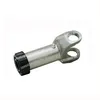
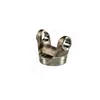
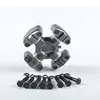
Common root causes include insufficient grease on the slip splines, worn U-joint bearing caps, bent driveshaft tubes, and incorrect driveline angles. The image above shows a typical heavy-duty slip yoke profile. Pay attention to the machined sealing area and the spline bore. If these surfaces are not concentric, the replacement part will create a vibration even when the spline count is correct.
Replacing a slip yoke is not a job that requires a machine shop, but it does require the right hand tools and a clean work area. The most common mistake is hammering the old yoke off the output shaft or forcing a new yoke onto rusty splines. That damages the transmission bushing and creates excessive radial play.
Pain point: Maintenance technicians often work with limited tooling. Without a proper puller or slide hammer, they may use heat or a pry bar, which can distort the new yoke or damage the output shaft seal.
Solution: Use a transmission jack or jack stands, a torque wrench, snap ring pliers, a seal puller, a brass drift, and a slide hammer with a yoke puller attachment. Before installation, inspect the splines, clean all grease and debris, and replace the transmission tail shaft seal unless it was recently changed. Apply a light coat of the lubricant recommended by the vehicle or equipment manufacturer to the slip yoke splines.
Here is a quick preparation checklist:
| Check | Why it matters | Recommended action |
|---|---|---|
| Transmission output shaft spline wear | Controls torque transfer and alignment | Replace or repair if step wear is visible |
| Tail shaft seal condition | Prevents fluid leaks after yoke replacement | Replace seal during every yoke job |
| U-joint bearing cap fit | Affects vibration and service life | Verify cap diameter and snap ring groove |
| Slip yoke seal surface | Must be smooth for proper sealing | Check for pitting, scoring, or chrome damage |
Once these checks are complete, the driveshaft can be removed safely and the old yoke can be separated from the U-joint.
This section answers the core question directly. The process below applies to most rear-wheel-drive trucks, vans, and off-highway machines with a splined slip yoke at the transmission or transfer case.
For procurement teams, the most important step is measurement. A replacement slip yoke may look identical but have a different spline pitch or U-joint series. Raydafon Technology Group Co.,Limited supports buyers with detailed drawings and cross-reference data to confirm fitment before shipment.
When purchasing a replacement slip yoke, guessing from a photo is not enough. Driveline parts are built around standardized U-joint series and spline specifications, but small differences in length or seal diameter can prevent installation.
Pain point: A purchasing agent orders a slip yoke based on vehicle model alone. The part arrives, but the U-joint is a different series or the spline count is off by one tooth. The vehicle stays down for another week.
Solution: Use the parameter table below as an internal checklist before sending a purchase order. Share the measured values with your supplier and request a drawing confirmation.
| Parameter | What to measure | Typical range or example |
|---|---|---|
| Spline count | Number of internal teeth on the slip yoke | 16, 25, 31, 35 splines |
| Spline major diameter | Largest diameter inside the spline bore | 1.375 in to 2.500 in |
| U-joint series | Bearing cap diameter and cross width | 1310, 1350, 1410 series |
| Centerline to end length | Distance from U-joint center to yoke hub end | 3.500 in to 9.000 in |
| Seal surface diameter | Outside diameter where the tail shaft seal rides | Varies by transmission model |
| Material and coating | Base steel and surface treatment | Forged steel, nitride coated, chrome seal surface |
These values allow a supplier to identify the correct part number faster and reduce the risk of a wrong shipment. If you are sourcing multiple yokes for a fleet, create a standard inspection form for each driveline model.
Not all slip yokes are equal. In a light-duty application, a standard forged yoke may last for years. In a loaded truck, mining vehicle, or agricultural driveline, the same part may wear out quickly because of high torque, frequent suspension cycles, and contaminated environments.
Pain point: Buyers often focus on the lowest unit price. They end up replacing the same slip yoke two or three times per year, increasing labor costs and downtime far beyond the initial savings.
Solution: Evaluate total cost of ownership. A slightly higher upfront cost for a hardened yoke with a polished seal surface usually reduces unplanned maintenance. Raydafon Technology Group Co.,Limited helps procurement teams compare yoke materials, coatings, and tolerances based on the application.
| Application | Recommended slip yoke feature | Reason |
|---|---|---|
| Highway delivery truck | Standard forged steel yoke with tight spline fit | Balanced performance and cost |
| Mining or off-highway machine | Induction-hardened splines and heavy-duty U-joint | High shock load and contamination |
| Agricultural driveline | Nitride-coated splines and greaseable slip design | Frequent angle changes and wet conditions |
| Performance or racing vehicle | Lightweight chromoly yoke with high-speed balance | Reduced rotating mass and vibration |
Ask the supplier for Rockwell hardness, material grade, and runout specification before placing a bulk order. The best source will provide these values without hesitation.
Question: How do you replace a slip yoke without removing the transmission?
In most rear-wheel-drive and four-wheel-drive applications, the transmission stays in place. You remove the driveshaft, separate the old slip yoke from the U-joint or pull it from the output shaft, inspect the seal surface, and install the new yoke. Use a slide hammer puller instead of prying against the transmission housing. Replacing the tail shaft seal during this job prevents a repeat leak. When sourcing the new yoke, verify the spline count, U-joint series, and overall length.
Question: How do you replace a slip yoke when the old part is heavily worn or seized?
If the old yoke is seized on the output shaft, spray a penetrating lubricant on the splined area and use a slide hammer with the correct puller adapter. Do not use direct heat, because extreme temperature can damage the transmission output shaft seal and bushing. After removal, check for rust, pitting, and step wear. If the mating shaft is also worn, replacing only the slip yoke will not restore a tight fit. In that case, source both the yoke and the output shaft repair part from a supplier that can cross-reference the original equipment dimensions. Raydafon Technology Group Co.,Limited provides this type of dimensional support for fleet buyers.
If you are replacing a slip yoke on a fleet vehicle or production driveline, share your measured spline count, U-joint series, and length with our team before you order. Raydafon Technology Group Co.,Limited is a specialized supplier of driveline and hydraulic components, serving procurement teams that need reliable dimensional data, competitive pricing, and responsive technical support. Our product range includes slip yokes, drive shaft parts, and related hydraulic components. We help buyers solve fitment issues and reduce downtime by confirming specifications before shipment. For more information, visit https://www.hydraulics-cylinder.com or contact our sales team at [email protected].
Reference research papers
J. Thompson, 2020. Investigation of spline wear mechanisms in automotive driveshaft slip yokes. Wear, 458, 203-215.
R. Patel and L. Chen, 2021. Vibration analysis of heavy-duty drivelines with worn slip splines. Journal of Sound and Vibration, 490, 115-130.
M. Rodriguez, 2019. Influence of induction hardening on fatigue life of transmission yokes. Materials Science and Engineering A, 746, 342-350.
S. Kim, 2022. Finite element simulation of universal joint bearing cap stresses in commercial vehicles. International Journal of Automotive Technology, 23(4), 1012-1024.
A. Johnson, 2018. Driveline angle optimization and its effect on slip yoke service life. SAE International Journal of Commercial Vehicles, 11(2), 87-96.
H. Zhang and M. Liu, 2021. Contact analysis of spline connections under torque and misalignment. Mechanism and Machine Theory, 156, 104-118.
B. Wilson, 2020. Corrosion-fatigue failure of nitrided steel yokes in agricultural driveshafts. Engineering Failure Analysis, 115, 104-115.
K. Anderson, 2017. Effects of lubrication interval on spline wear in telescoping drive shafts. Tribology International, 112, 250-260.
D. Garcia, 2023. Comparison of forged and cast slip yokes for medium-duty truck applications. SAE International Journal of Commercial Vehicles, 16(1), 55-68.
E. Nakamura, 2022. Dynamic behavior of driveshaft assemblies with worn slip yokes. Journal of Vibration and Control, 28(7-8), 901-912.
-