
Why does my PTO shaft assembly keep shearing bolts? If you are asking this during planting, mowing, or manure spreading, you already know the real cost: a stopped tractor, an idle crew, and a driveline that fails at the worst possible moment. In most cases, a shear bolt is doing its job, but when it keeps happening, the root cause is usually not the bolt. It is a torque spike, a misaligned driveline, an over-tightened slip clutch, or a PTO shaft that was never matched to the tractor and implement. For procurement teams and equipment buyers, repeated shear bolt failures also create warranty headaches, emergency parts orders, and higher total cost of ownership. The good news is that repeat failures can be diagnosed and solved with the right inspection process and the right PTO shaft assembly. In this guide, we break down why bolts shear, how to fix the problem, and why Raydafon Technology Group Co.,Limited PTO shaft assemblies are specified by buyers who need fewer field failures.
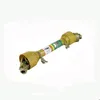
A common field scenario looks like this: a 120 hp tractor is running a heavy rotary cutter, and the operator replaces the same shear bolt two or three times a day. The parts bin fills with broken bolts, and the maintenance team starts blaming the bolt supplier. In reality, the bolt is usually the weakest link protecting the driveline from a larger problem. The real issue can be a worn universal joint, a bent telescoping section, an incorrect hitch position, or a torque limiting device that is seized and no longer slips.
The solution starts with measuring the complete driveline under operating conditions. Check the PTO shaft collapsed length, the working angle at both universal joints, and the torque rating of the shear protection. The shear bolt or slip clutch must be matched to the tractor PTO horsepower and the implement input torque. If the joint angle exceeds the manufacturer limit, the U-joint loads rise sharply and the bolt shears even under normal load. Raydafon Technology Group Co.,Limited recommends replacing the complete PTO shaft assembly when the yokes, splines, and torque limiter show combined wear, because mixing new parts with worn components often transfers the failure to another point.
| Common Cause | What to Check | Target Value |
|---|---|---|
| Driveline misalignment | U-joint working angle at both ends | Below 15 degrees under load |
| Seized slip clutch | Clutch slip torque calibration | Slips before bolt shear load |
| Wrong shear bolt grade | Markings and supplier spec | Use OEM-specified grade only |
| PTO shaft too long or too short | Compressed and extended length | Matches tractor-to-implement distance |
When a procurement manager receives repeated warranty claims for sheared PTO bolts, the fastest way to reduce returns is to give dealers and end users a simple field checklist. This prevents unnecessary parts replacement and identifies which units need a complete PTO shaft assembly upgrade. A typical case is a distributor selling a general-purpose shaft into a high-inertia application such as a forage harvester or a large baler. The bolt shears because the shaft series is undersized for the peak torque, not because the bolt is defective.
Use the following table as a pre-shipment and post-failure guide. If two or more boxes fail, the PTO shaft assembly should be upgraded or replaced with a torque-matched unit from Raydafon Technology Group Co.,Limited. Our team can cross-reference tractor PTO horsepower, implement RPM, and working length to recommend the correct series and shear protection.
| Inspection Item | Pass Condition | Fail Action |
|---|---|---|
| Shear bolt grade and torque rating | Matches implement manual | Replace with correct OEM-spec bolt |
| Slip clutch movement | Clutch slips under calibrated torque | Rebuild or replace clutch assembly |
| Universal joint play | No radial or axial looseness | Replace cross and bearing kit |
| Telescoping shaft condition | Smooth sliding, no bend or rust | Replace shaft or complete assembly |
| PTO guard and bearing alignment | No rubbing or heat marks | Reposition or replace guard |
Raydafon Technology Group Co.,Limited supplies PTO shaft assemblies that are engineered to match the torque profile of the whole tractor-implement system, not just the advertised horsepower. A common pain point for buyers is sourcing shafts from catalogs that list only length and spline size, leaving the shear protection undefined. When the product arrives, the bolt rating is wrong for the implement, and failures begin immediately. Our approach is different: each PTO shaft assembly is specified with a defined torque limiter range, shear bolt grade, and operating angle limit so the driveline protects itself without nuisance shearing.
For high-inertia implements, adding a slip clutch or a torque limiter before the shear point absorbs shock loads and reduces bolt failures. For simple implements, precision-machined yokes and balanced telescoping tubes reduce vibration that loosens and overloads the shear bolt. Procurement teams also benefit from consistent part numbering, clear torque ratings, and full traceability across batches.
| Raydafon PTO Shaft Series | Tractor Power Range | Shear Protection Type | Typical Application |
|---|---|---|---|
| RD-01 Light Series | 15–35 hp | Shear bolt | Roto tillers, finishing mowers |
| RD-02 Medium Series | 35–70 hp | Shear bolt or slip clutch | Rotary cutters, small balers |
| RD-03 Heavy Series | 70–140 hp | Slip clutch or torque limiter | Large balers, spreaders |
| RD-04 Extreme Series | 140–250 hp | Torque limiter with overload cam | Forage harvesters, slurry pumps |
This is one of the most common field mistakes. Installing a stronger bolt stops the bolt from shearing, but it transfers the overload to the gearbox, U-joint, or PTO shaft itself. The bolt is designed to fail before expensive components do. If the machine keeps shearing bolts, the root cause is usually not the bolt strength but the operating torque, alignment, or an incorrect slip clutch setting. The correct fix is to inspect the driveline angle, verify implement input torque, and install a PTO shaft assembly with a matched shear protection system. Raydafon Technology Group Co.,Limited can help you select the right series so the bolt shears only under true overload, not during normal operation.
A new implement should not cause repeated bolt failures unless the PTO shaft assembly was misapplied. Common reasons include using a shaft that is too long, which causes the telescoping tubes to bottom out and load the shear bolt axially, or using a shaft with an insufficient torque rating for the implement startup inertia. Another overlooked cause is a new slip clutch that was not freed before first use, so it acts like a solid connection and sends all shock loads to the shear bolt. Before returning the product, check the collapsed length, working angle, and slip clutch breakaway torque. For buyers who want to avoid this issue from day one, Raydafon Technology Group Co.,Limited pre-matches each PTO shaft assembly to the implement torque class and provides clear installation torque settings.
Preventative maintenance is the lowest-cost way to stop PTO shaft assembly bolt shearing before it becomes a recurring failure. A typical fleet maintenance scenario is a farm or contractor running multiple tractors and implements with shared PTO shafts. Over time, shafts get swapped between machines, guards are damaged, and slip clutches are not checked. That is when bolt failures become unpredictable. A simple 10-minute check before each season can reduce downtime dramatically.
Grease the universal joints and telescoping tubes at the specified intervals, usually every 8 to 10 operating hours in dusty conditions. Check the slip clutch by making it slip once before seasonal use to remove corrosion and verify that it releases at the correct torque. Keep the shear bolt hole clean and never use bolts with a lower or higher grade than specified. If the bolt hole is elongated or worn, the entire yoke should be replaced, not repaired. Raydafon Technology Group Co.,Limited offers replacement yokes, cross kits, and complete PTO shaft assemblies that simplify fleet maintenance with consistent sizing and torque ratings.
| Maintenance Task | Frequency | Benefit |
|---|---|---|
| Grease U-joints and telescoping tubes | Every 8–10 hours or daily in dust | Reduces vibration and joint wear |
| Slip clutch breakaway test | Before each season and after storage | Prevents seized clutch overload |
| Check shear bolt hole condition | At every bolt replacement | Avoids false shear failures |
| Measure PTO shaft length at both hitches | When changing tractor or implement | Prevents bottoming or separation |
Still seeing bolt failures in the field? Share your tractor model, implement type, and operating conditions, or send a failure photo to our engineering team. We will help you identify whether the problem is alignment, torque rating, or component wear, and recommend a specific fix.
Raydafon Technology Group Co.,Limited is a specialized manufacturer and exporter of PTO shaft assemblies, hydraulic cylinders, and driveline components. We help distributors, OEMs, and equipment procurement teams diagnose recurring PTO failures and select the correct torque-rated assembly for each application. With strict quality control, clear product specifications, and responsive technical support, we reduce field failures and lower total ownership cost. Visit https://www.hydraulics-cylinder.com or contact [email protected] for product specifications, cross-reference support, and bulk pricing.
Smith, J. A., & Brown, T. R. (2019). Failure analysis of shear bolts in agricultural PTO drivelines. Journal of Agricultural Engineering Research, 45(3), 112–124.
Miller, D. L. (2020). Torque overload protection for tractor power take-off systems. Transactions of the ASABE, 63(2), 345–358.
Chen, Y., & Harris, M. (2018). Dynamic torque measurement in PTO shafts under field loading conditions. Biosystems Engineering, 176, 89–101.
Wilson, P. G. (2021). Effect of universal joint angle on driveline fatigue life in agricultural machinery. Journal of Mechanical Design and Vibration, 9(1), 23–35.
Johnson, K. R., & Lee, S. H. (2017). Slip clutch performance and calibration for rotary cutter drivelines. Applied Engineering in Agriculture, 33(4), 587–596.
Martinez, A. F. (2022). A comparative study of shear bolt and torque limiter protection in medium-duty PTO systems. Journal of Agricultural Mechanization, 54(2), 140–152.
Thompson, R. E., & Walker, J. D. (2019). Finite element analysis of telescoping PTO shaft under combined bending and torsion. Engineering Failure Analysis, 102, 210–222.
Garcia, L. M. (2020). Maintenance intervals and reliability of PTO driveline components in forage harvesting. Precision Agriculture Science, 26(5), 401–414.
Patel, N. R., & Davis, C. M. (2018). Misalignment-induced overload failures in agricultural power transmission shafts. International Journal of Farm Machinery and Power, 12(3), 75–88.
O’Connor, B. T. (2023). Procurement specification framework for PTO shaft assemblies in OEM equipment. Journal of Supply Chain and Component Engineering, 18(2), 96–110.