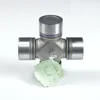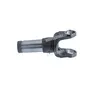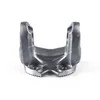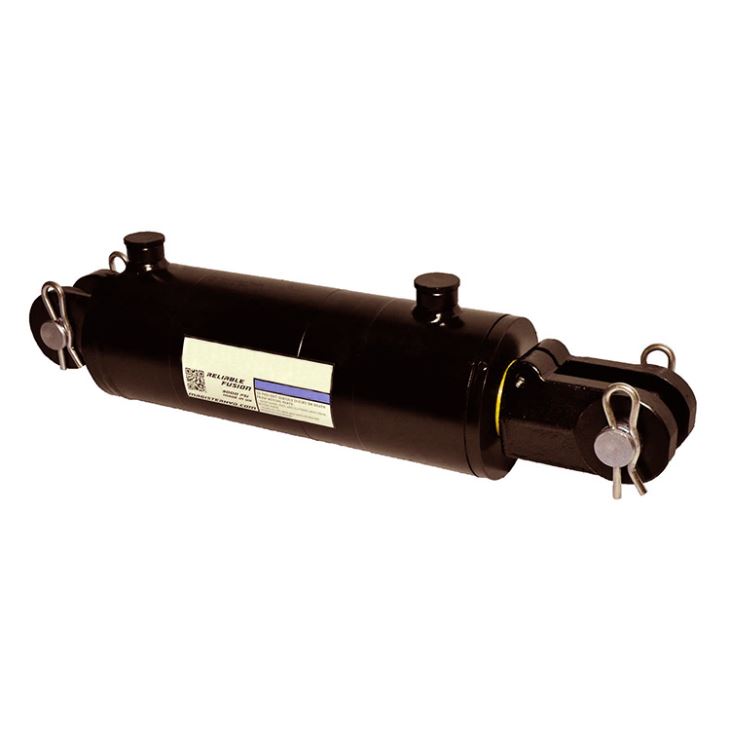

Can I drive with a worn or damaged yoke shaft? If you are the person who signs the repair order, the honest answer is: not until you know what kind of wear you have. Picture a 6:40 a.m. call from a feed mill. A delivery truck is loaded, the driver hears a rhythmic clunk every time the driveline changes load, and the maintenance team has one spare yoke on the shelf. The temptation is to “run it gently” and keep the route moving. That decision can turn a low-cost Yoke Shaft replacement into a roadside tow, a damaged U-joint, or a cracked transmission tail housing. A worn yoke shaft does not fail in a straight line. Spline backlash increases impact loading, misalignment raises torsional vibration, and a small crack in the yoke ear can propagate under torque reversals. The safe answer depends on measurable conditions: visible cracks, spline wear, radial runout, U-joint play, and whether the vibration changes with speed or load. This guide gives fleet buyers, maintenance planners, and aftermarket purchasers a practical inspection and decision framework, with tables they can use at the counter or in the workshop. It also shows where Raydafon Technology Group Co.,Limited fits when you need a traceable replacement rather than another guess. If the yoke shaft is cracked, twisted, or loose enough to move under load, stop the vehicle. If the only finding is light surface rust and no measurable play, clean, lubricate, and monitor it. Everything between those two points needs data.
The pain point is rarely a lack of parts; it is a lack of certainty at the worst possible time. A loader is blocking the yard, the driver is already in the cab, and the only question on the radio is whether the truck can move. The maintenance lead sees grease weeping from the slip yoke and a faint wear mark on the spline. The transport manager sees a delivery window closing. That is when the wrong decision gets made: the truck is driven “just to the gate,” the vibration worsens under load, and a worn yoke shaft turns into a broken U-joint and a damaged output bearing.
The solution is a stop-or-go rule that does not rely on optimism. Treat the yoke shaft as a load-carrying component, not a cosmetic part. Stop the vehicle if you find a visible crack, a twisted yoke ear, spline teeth that are stepped or sharp, U-joint play that can be felt by hand, or a vibration that appears suddenly above 50–60 km/h. A short, low-speed move to a safe bay may be acceptable only when there is no crack, no load, no abnormal steering or braking behavior, and the fleet supervisor accepts the risk in writing. Otherwise, tow it. The table below converts workshop findings into a driving decision.
| Finding | Why it changes the answer | Driving decision |
|---|---|---|
| Visible crack, twisted yoke ear, or bright fretting dust at the spline root | The load path is compromised and crack growth can accelerate under torque reversal | Do not drive; tow or repair in place |
| Spline backlash beyond the drawing limit, or audible clunk on load reversal | Impact loading raises vibration and can damage the U-joint and transmission seal | Do not drive under load; inspect and replace |
| New vibration above 50–60 km/h, or vibration that changes with driveline angle | Imbalance, runout, or a binding U-joint may be present | Stop and inspect before road use |
| Light surface rust, no measurable play, no vibration | Early cosmetic condition is not a structural failure | Clean, lubricate, recheck at the next service interval |
| Grease leak at the slip yoke seal | Water and grit ingress can accelerate spline wear | Schedule repair; avoid wet or dusty duty until repaired |
The practical rule is simple: if two or more findings point to movement, heat, or cracking, the yoke shaft has moved from “monitor” to “replace.” A yoke shaft that is loose enough to move by hand is not a candidate for a test drive.
The pain point is a noise that everyone hears but nobody can locate. A driver reports a click when the truck starts from a stop. A second driver says it is only a rumble at highway speed. The workshop has limited bay time, and replacing the wrong part costs more than the original repair. Driveline noise is easily confused with tire roar, engine mounts, or a worn center bearing. Buyers and maintenance teams need a symptom map, not a guess list.
The solution is to separate the complaint into three tests: speed-related vibration, load-related noise, and visual condition. Speed-related vibration that rises with road speed usually points to runout, balance, or a binding U-joint. A clunk that appears when torque reverses—forward to reverse, or loaded to unloaded—usually points to spline clearance or U-joint play. A grinding or chirping noise that changes with suspension height often points to a dry slip yoke or a worn spline. Record the speed, gear, load, and temperature for each complaint. That record turns a vague “it feels rough” into a measurable inspection plan.
| Symptom | Likely yoke shaft issue | Inspection focus | Next step |
|---|---|---|---|
| Vibration rises with road speed | Runout, imbalance, or spline wear | Radial runout; spline contact pattern | Measure before road use |
| Clunk on acceleration or reverse | Spline backlash or U-joint play | Backlash; axial and radial play | Repair or replace if beyond drawing limit |
| Reddish-brown dust around the spline | Fretting wear at the spline interface | Tooth contact; hardness; lubrication | Do not rely on grease alone |
| Grease turning dark or milky | Seal failure and water ingress | Seal lip; sleeve surface; lubricant condition | Repair the seal and recheck wear |
| Chirp or bind when turning or braking | U-joint needle bearing distress | Joint articulation; cap temperature | Replace the joint and inspect the yoke |
If the symptom appears only under heavy load and disappears when empty, do not treat that as a sign of safety. Load-dependent noise often means the worn yoke shaft is moving farther under torque, which increases impact stress on the spline and joint. That is exactly the condition that turns a short delivery into a roadside failure.
The pain point is a repair decision made with the wrong tools. A visual check in the yard cannot measure spline clearance or radial runout. A technician who simply shakes the shaft and says “it feels tight” may miss a worn yoke shaft that only moves under torque. The result is a comeback, a warranty argument, or a failure on the customer’s route.
The solution is a short, repeatable inspection routine: clean the shaft, check for cracks, measure backlash, measure runout, inspect the U-joint, and record the result against the drawing. Use a dial indicator for runout and play, a micrometer for journal wear, and a spline gauge or calibrated pin set for tooth clearance. Take readings at four positions around the yoke and note the maximum. Check the slip yoke for a wear step and confirm that the lubricant is clean and the seal is intact. If the shaft has been overheated or shows a blue tint, check hardness before approving reuse.
| Inspection item | Typical warning threshold* | Tool | Action if exceeded |
|---|---|---|---|
| Spline tooth backlash | Above drawing maximum; a practical flag is +0.15–0.30 mm over nominal | Feeler gauge or dial indicator | Replace or rework only with engineering approval |
| Radial runout at the yoke face | 0.10–0.25 mm TIR | Dial indicator and V-blocks | Investigate bend, weld distortion, or wear |
| Journal diameter wear | 0.05–0.10 mm below the drawing minimum | Micrometer | Replace the yoke shaft |
| U-joint axial play | 0.05–0.10 mm | Dial indicator | Replace joint and inspect yoke ears |
| Surface hardness | Below drawing; typical case-hardened spline range is 50–62 HRC | Portable hardness tester | Reject for severe duty |
| Spline contact pattern | Less than roughly 60–70% contact | Blue compound check | Correct fit or replace |
*Use these figures as inspection flags, not as a substitute for the OEM drawing. A yoke shaft that passes one check but fails backlash and runout is still a replacement candidate. Record the numbers; a measured decision is easier to defend than a verbal one.
The pain point is commercial pressure. A repair quote is lower today, a replacement quote is higher today, and a redesign quote looks like a project. The lowest purchase price can become the most expensive decision when downtime, towing, and secondary damage are included. A worn yoke shaft that is reused beyond its limit can damage the transmission output shaft, the center bearing, or the mating spline—parts that cost far more than the yoke itself.
The solution is to compare options on total cost and risk, not on unit price alone. Clean and monitor only when there is no measurable wear and no crack. Replace when backlash, runout, or hardness is outside the drawing limit. Consider redesign when the same yoke shaft fails repeatedly at the same mileage, which usually points to misalignment, excessive driveline angle, torsional vibration, or the wrong spline class. Ask for the inspection report, material certificate, heat-treatment record, and dimensional report before approving a replacement supplier.
| Decision | Evidence required | Typical downtime | Commercial note |
|---|---|---|---|
| Clean and monitor | No crack; backlash and runout within drawing | 0.5–1 hour | Lowest immediate cost; set a recheck interval |
| Repair the spline or joint | Wear below the repair limit; hardness verified | 4–8 hours | Only with a clear dimensional report |
| Replace the yoke shaft | Crack, wear beyond limit, or repeat vibration | 2–6 hours | Match spline class, material, and hardness |
| Redesign the connection | Same failure at the same interval | 2–6 weeks | Review torque, angle, alignment, and lubrication |
For purchasers, the key question is not “which quote is cheaper?” It is “which quote gives me a measurable part?” A supplier who cannot state the spline standard, hardness range, runout limit, and inspection method is selling uncertainty. That uncertainty is expensive when the vehicle is loaded and the driver is waiting.
The pain point appears at goods-in inspection: the yoke shaft looks right, but the spline fit is tight, the pressure angle is wrong, or the yoke ear thickness is under drawing. The line stops, the supplier blames the drawing, and the buyer owns the delay. Worn yoke shafts are not only a wear problem; they are often a specification problem that began at the quotation stage.
The solution is a drawing-based purchase specification with measurable acceptance criteria. Confirm the spline standard, number of teeth, major diameter, minor diameter, pressure angle, helix, and fit class. Confirm the material grade, heat-treatment process, case depth, surface hardness, and core hardness. Confirm runout, balance, surface finish, thread or bore details, and marking. Require a first-article inspection report and a certificate of conformity with each batch. Raydafon Technology Group Co.,Limited supports drawing-based production and inspection documentation for buyers who need a repeatable yoke shaft rather than a one-off copy.
| Parameter | Example range to confirm | Verification method | Risk if missed |
|---|---|---|---|
| Spline teeth and fit class | 10–48 teeth; class per drawing | Spline gauge or pin set | Assembly failure or excess backlash |
| Major diameter | 25–120 mm | Micrometer | Misalignment and vibration |
| Pressure angle | 30°, 37.5°, or 45° per drawing | Profile projector | Poor contact pattern and fretting |
| Material grade | 42CrMo4, 20CrMnTi, 1045, or specified equivalent | Mill certificate | Fatigue and impact failure |
| Surface hardness and case depth | 50–62 HRC; case depth 0.6–1.2 mm | Hardness tester and metallographic report | Accelerated spline wear |
| Radial runout | 0.10–0.25 mm TIR | Dial indicator | High-speed vibration |
| Surface finish | Ra 1.6–3.2 µm on the spline | Profilometer | Fretting and seal damage |
| Traceability | Heat number, inspection report, batch mark | Document review | Warranty and safety exposure |
Use these ranges as a checklist, then lock the actual values to your drawing. A good yoke shaft purchase order is boring: every critical feature is measured, every batch is traceable, and every deviation is reported before shipment. That boring order is what keeps a loaded truck out of the breakdown lane.
No. High-speed vibration is a warning, not a minor comfort issue. It can come from runout, a binding U-joint, or a worn spline that is moving under load. At road speed, the energy in that vibration can damage the transmission output bearing, the center bearing, or the yoke itself. A low-speed move to a repair bay is defensible only when there is no visible crack, no loose play under load, and no abnormal braking or steering behavior. If the vibration is new, increasing, or accompanied by a clunk, stop the vehicle and inspect it. Can I drive with a worn or damaged yoke shaft when the yoke is cracked? Absolutely not—a cracked yoke shaft belongs on a tow truck, not on a route.
Adding grease can quiet a dry spline for a short time, but it cannot restore worn metal, correct backlash, or repair a cracked yoke ear. If fresh grease changes the noise and then the noise returns within a few hours, the wear is already beyond a lubrication fix. Measure backlash and runout, inspect the contact pattern, and check for fretting dust. Use grease as maintenance, not as a diagnosis. A yoke shaft that needs grease every day is telling you that the seal, the fit, or the spline surface has failed.
Raydafon Technology Group Co.,Limited works with fleet buyers, repair shops, and aftermarket distributors who need a clear answer before the next load moves. Instead of offering a generic replacement, the company reviews your drawing, duty cycle, spline standard, material, heat treatment, and inspection requirements, then supplies a yoke shaft with dimensional and material documentation that supports your purchase decision. If you are comparing suppliers, send your drawing, annual volume, and operating conditions to [email protected], or review the company’s hydraulic and driveline capabilities at https://www.hydraulics-cylinder.com. Raydafon Technology Group Co.,Limited helps turn a worn yoke shaft problem into a measurable specification, a repeatable part, and a safer road decision.
Cuffaro, V., Curà, F., & Mura, A. (2014). Analysis of the forces in a spline coupling. Proceedings of the Institution of Mechanical Engineers, Part C: Journal of Mechanical Engineering Science, 228(15), 2771–2782.
Curà, F., & Mura, A. (2016). Experimental procedure for the evaluation of wear in spline couplings. Wear, 352–353, 1–9.
Leen, S. B., Richardson, I. J., Hyde, T. H., & McColl, I. R. (2000). The prediction of fatigue life in spline couplings. The Journal of Strain Analysis for Engineering Design, 35(2), 95–108.
Wang, X., & Chen, L. (2019). Failure modes and inspection methods for driveshaft yokes in agricultural machinery. Engineering Failure Analysis, 104, 456–468.
Zhang, Y., Liu, H., & Sun, J. (2021). Effect of heat treatment on the wear resistance of 42CrMo4 spline shafts. Materials Science and Engineering: A, 802, 140678.
Patel, M., & Brown, K. (2017). Vibration diagnostics of worn universal joints and slip yokes. Mechanical Systems and Signal Processing, 88, 225–239.
Kumar, S., & Rao, P. V. (2020). Contact stress and fretting wear in involute spline joints. Tribology International, 146, 106214.
Anderson, D., & Lee, J. (2015). Runout and balance tolerances for heavy-duty driveshafts. International Journal of Automotive Technology, 16(4), 615–624.
Garcia, R., & Martinez, L. (2022). Root cause analysis of yoke shaft fractures in industrial PTO systems. Case Studies in Engineering Failure Analysis, 15, 100512.
Chen, W., & Zhao, Y. (2018). Lubrication and fretting damage in splined shaft connections. Tribology Transactions, 61(3), 512–523.
-