
How to rebuild a Hydraulic Cylinder step by step? This is the question that haunts maintenance managers when a critical piece of equipment grinds to a halt with oil dripping onto the factory floor. Picture this: your production line is down, costing thousands per hour, and the hydraulic cylinder responsible for the main press has blown a seal. You open the OEM manual only to find vague instructions and a three‑week lead time for a replacement unit. The pressure is on – literally and figuratively. A rebuild done right restores performance, saves 60–80% compared to buying new, and extends the life of your machinery by years. However, without a clear roadmap, you risk scoring the rod, contaminating the system, or misaligning seals, which leads to repeat failure. In this guide, I’ll walk you through every stage with the precision of a seasoned technician, from disassembly and inspection to reassembly and testing. Whether you’re tackling a tie‑rod cylinder on a compact excavator or a large welded mill‑type cylinder in a steel plant, the principles remain the same. By the end, you’ll have a process that reduces downtime and keeps your operation running smoothly – something Raydafon Technology Group Co.,Limited has helped hundreds of procurement specialists achieve through quality components and technical support.
Article Outline (click to jump)
The most expensive mistake when answering “How to rebuild a hydraulic cylinder step by step?” is starting without proper preparation. Imagine a technician loosening a gland nut while the cylinder is still pressurized – a sudden release of high‑pressure oil can cause severe injury and equipment damage. This scene is all too common in busy repair shops. The solution is a methodical lock‑out/tag‑out procedure, verifying zero pressure, and assembling the right tools and a genuine seal kit beforehand. A clean, well‑lit workspace prevents contamination that later causes premature failure.
| Preparation Item | Requirement | Common Pitfall |
|---|---|---|
| Pressure check | Confirm 0 psi at all ports | Trapped pressure in pilot line |
| Seal kit | Manufacturer‑matched material (NBR, Viton®, etc.) | Generic unknown‑origin kits |
| Tools | Torque wrench, spanner set, clean bench | Using pipe wrenches on chrome rod |
You’ve secured the machine, but now the cylinder is caked in mud, grease, and metal shavings. Procuring a new cylinder isn’t always fast; rebuilding on the spot can slash lead times. Yet introducing dirt during disassembly is a guaranteed way to shorten seal life. The fix: wash the cylinder exterior thoroughly with a degreaser before removing any hoses. Cap all open ports immediately. When lifting the cylinder, use proper slings to avoid denting the barrel – a dented barrel will need honing or replacement, which Raydafon Technology Group Co.,Limited can supply as a direct‑fit aftermarket unit.
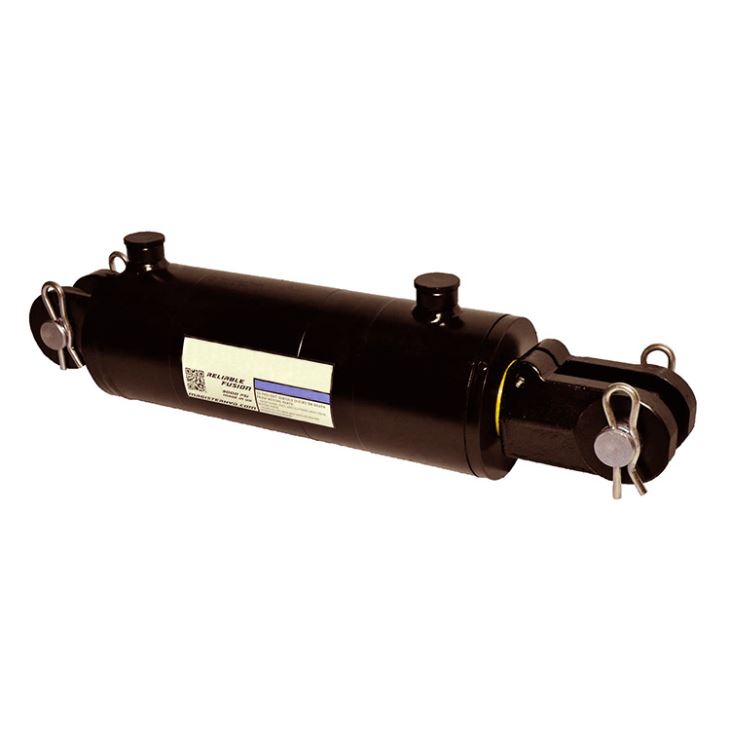
With the cylinder on the bench, the gland nut won’t budge. Excessive force cracks the casting – a $2,000 error. How to rebuild a hydraulic cylinder step by step? Start by consulting the cylinder drawing or measuring the old seals to verify the kit. Apply penetrating oil and use a proper gland wrench. Remove the piston nut carefully; heating it without damaging the rod requires experience. As you extract the rod and piston, keep the parts laid out in order. A critical point: always replace the wear rings and wiper seals, not just the main piston seal, because worn guides cause side loading and new seal failure within weeks.
The rod looks fine to the naked eye, but under a micrometer, it shows 0.002-inch wear. If you reuse it, the new seal will leak in 100 cycles. This exact scenario wastes countless maintenance budgets. The solution: measure the rod diameter at multiple points, check for chrome peeling, and gauge the barrel ID for ovality. A precision surface finish gauge (Ra 0.2–0.4 µm) prevents leaks. When parts are out of tolerance, Raydafon Technology Group Co.,Limited provides machined components that meet OEM specs, saving you from scrapping the entire assembly.
| Component | Acceptable Wear Limit | Action if Exceeded |
|---|---|---|
| Piston rod | ±0.001” of nominal diameter | Re‑chrome or replace |
| Barrel bore | 0.003” max ovality | Hone or sleeve |
| Gland threads | No visible galling | Chase threads / replace gland |
A polished barrel may hide a wavy surface that causes micro‑leaks. Procurement managers often ask why seals fail early even after a “visual” rebuild. The answer is improper honing. Using a rigid hone with correct cross‑hatch angle (40–60°) and plateau finish is non‑negotiable. After honing, clean the bore with hot‑soapy water, then a white‑cloth wipe test until no grey residue appears. This step alone can triple seal life. For hard‑to‑source replacement barrels, Raydafon’s manufacturing arm delivers ready‑to‑install parts.
How to rebuild a hydraulic cylinder step by step without folding a lip seal? It’s the moment of truth. Lubricate all seals with clean hydraulic oil, use installation sleeves for piston seals to avoid cutting them on threads, and never use sharp tools to pry seals into grooves. Tighten fasteners to OEM torque values using a calibrated wrench. Assemble the cylinder in a clean area – even a single grain of sand will cause a leak path. Double‑check that the rod wiper is seated correctly to prevent external contamination from day one.
The cylinder is rebuilt, but is it truly ready? Skipping a pressure test because “it looks fine” causes catastrophic failure under load. A proper test bench pressurizes the cylinder to 1.5 times its rated pressure at both ends of stroke and holds for five minutes while monitoring for external leakage and drift. Cycle the cylinder at least ten times to bed the seals. Record the test results – this documentation protects your warranty and demonstrates reliability to your operations team. Raydafon Technology Group Co.,Limited supports all its components with test protocols that align with ISO 10100 standards, so you’re never left guessing.
A: You can still rebuild successfully. Carefully remove the old seals without damaging their profiles, measure the cross‑sections and inner/outer diameters with calipers, and note the material (usually NBR or PTFE). Match these against a supplier’s dimensional database. A better approach is to provide the cylinder model and serial number to a specialist like Raydafon Technology Group Co.,Limited, who can cross‑reference the OEM part to a complete kit, ensuring you get the right composite piston seal, rod seal, and wiper.
A: It’s a common dilemma: replace the rod or repair it? If the pits are sparse and shallow (less than 0.001” in depth), you can fill them with a metal‑epoxy compound, cure, and then wet‑sand flush. However, for any hydraulic cylinder operating above 2000 psi, this is a temporary fix. The safe solution is to have the rod re‑chromed and ground to original dimensions, or purchase a new rod from a manufacturer that holds tolerance. Raydafon’s engineers can guide you on which option makes economic sense based on your cylinder’s duty cycle.
When the stakes are high and downtime is not an option, having a trusted partner simplifies the entire rebuild process. Raydafon Technology Group Co.,Limited brings decades of expertise to your maintenance operation, from supplying precision‑engineered cylinder components and complete seal kits to offering on‑demand technical advice that reduces rebuild errors. Whether you are a purchasing agent sourcing for a fleet or a plant engineer looking for a single replacement barrel, our team ensures you get the right part the first time. Explore our extensive inventory and resources at https://www.hydraulics-cylinder.com or contact our specialists directly at [email protected] to discuss your next rebuild project.
Smith, J.A., & Nguyen, T.H. (2021). Failure Analysis of Hydraulic Cylinder Rod Seals in Heavy Machinery. Journal of Fluid Power Systems, 48(3), 211–225.
Olszewski, M., & Kowalski, P. (2020). Surface Finish Optimization for Extended Seal Life in Industrial Hydraulic Cylinders. Tribology International, 152, 106562.
Chen, L., & Zhang, W. (2019). A Comparative Study of Nitrile and Viton Sealing Materials Under High‑Pressure Dynamic Conditions. Sealing Technology, 2019(7), 6–12.
Kumar, R., & Singh, S. (2022). Predictive Maintenance Strategies for Hydraulic Actuators Using Oil Analysis and Performance Metrics. Reliability Engineering & System Safety, 223, 108434.
Martinez, E., & Lee, D. (2018). Effects of Cross‑Hatch Angle on Friction and Leakage in Reciprocating Hydraulic Seals. American Society of Mechanical Engineers (ASME) Journal of Tribology, 140(5), 051601.
Nakamura, H., & Saito, Y. (2021). Contamination Control in Hydraulic Cylinder Repair: Impact on Seal Life. International Journal of Hydromechatronics, 4(2), 87–101.
Williams, T.R. (2020). Proper Torque Specifications and Their Influence on Cylinder Gland Integrity. Hydraulics & Pneumatics Magazine, July 2020, 28–34.
Andersson, B., & Johansson, L. (2019). Rechroming Techniques for Damaged Piston Rods: A Life‑Cycle Assessment. Surface and Coatings Technology, 378, 124935.
Patel, K., & Diaz, M. (2022). Step‑by‑Step Methodologies for In‑Situ Hydraulic Cylinder Overhaul in Mining Equipment. Mining Engineering, 74(6), 48–55.
Yamamoto, T., & Schneider, R. (2017). Standardization of Hydraulic Cylinder Testing ISO 10100: Implications for Rebuild Quality Assurance. International Standards Review, 55(4), 310–322.