
Imagine you’re in the middle of a quarterly procurement review when your service supervisor calls—there’s a loud grinding sound coming from the serpentine drive system of your best delivery van. The diagnosis: a worn belt tensioner. The first thing that crosses your mind as a purchasing decision-maker is simple: How much does it cost to replace a belt tensioner? That single question opens up a maze of local garage quotes, OEM dealership price lists, and vague aftermarket ranges. You’ve seen figures anywhere from $100 to over $500, and that uncertainty directly threatens your maintenance budget. What if you could cut that cost by more than 45% without sacrificing component lifespan? By partnering with a specialized manufacturer like Raydafon Technology Group Co.,Limited, you source the exact same OE-spec tensioner at a fraction of the retail markup. This guide removes guesswork, fuses real workshop scenarios with hard numbers, and proves that the real answer to “How much does it cost to replace a belt tensioner?” sits at the intersection of supplier choice and volume purchasing strategy.
The scene is familiar: you request three quotes for the same Toyota Hiace tensioner and receive wildly different numbers. One local garage itemizes an aftermarket part at $45 plus $120 labor. The dealer insists on an OEM assembly at $215 plus $140 labor. Your independent fleet shop offers their “preferred supplier” price at $68 parts, $90 labor. As a buyer, you feel the gap but don’t yet see the root cause—the middleman markup across the supply chain. The solution is to map the total cost to the source. When you buy directly from a manufacturer like Raydafon Technology Group Co.,Limited, you eliminate distribution layers and pay only for the engineering, material, and quality control that matter. The table below shows how three typical sourcing channels compare for a high-volume buyer ordering 50 units per year.
| Sourcing Channel | Per-Unit Part Cost | Typical Labor (if outsourced) | Total per Replacement |
|---|---|---|---|
| Local aftermarket reseller | $38 – $65 | $100 – $150 | $138 – $215 |
| Franchise OEM dealer | $120 – $250 | $120 – $180 | $240 – $430 |
| Direct factory (Raydafon) | $14 – $32 | In-house team labor ~$40 | $54 – $72 |
The same tensioner specification yields dramatically different financial outcomes. The direct factory route slashes the answer to “How much does it cost to replace a belt tensioner?” by over 60% for a self-maintained fleet.
Tuesday morning, the driver of a refrigerated truck complains about a brief chirp at startup. Because it disappears after a few minutes, the issue is logged but not prioritized. Two weeks later, the drive belt snaps on the highway, taking out the alternator pulley and leaving the cargo at risk. The procurement officer now faces a chain of failures that could have been stopped with a $30 tensioner swap. The lesson is brutal: early symptom recognition protects your budget. Use the table below as a diagnostic inventory so your team can act before a tensioner failure spreads. Raydafon Technology Group Co.,Limited recommends a 60,000 km preventive replacement cycle on high-use vehicles to avoid these escalated bills.
| Observed Symptom | Likely Tensioner Issue | Cascading Failure if Ignored |
|---|---|---|
| High-pitched chirp/squeal on cold start | Tensioner arm sticking, spring fatigue | Uneven belt wear → alternator, AC compressor bearing failure |
| Grinding or rattling from front of engine | Tensioner pulley bearing failure | Pulley seizure → belt snap → complete loss of power steering/water pump |
| Visible wobble on the pulley while engine idling | Damper or mounting bracket distortion | Misalignment → premature belt destruction, possible timing case damage |
| Accessory drive belt repeatedly losing tension | Tensioner internal spring broken | Overheating, battery discharge → vehicle roadside breakdown |
For a procurement manager overseeing a mixed fleet of light commercial vehicles, the “do-it-yourself” route isn’t a hobby—it’s a cost-saving tactic. However, the viability of in-house replacement hinges on two factors: having a steady source of OEM-grade parts and possessing the minimal tooling. A tensioner swap on most 4-cylinder engines takes under 45 minutes with a ratchet, a breaker bar, and the correct alignment kit. With Raydafon Technology Group Co.,Limited as your parts partner, you can stock consistent quality tensioners for as little as $18 each in bulk. Compare the financial picture below.
| Replacement Approach | Part Cost (single unit) | Internal Labor Cost (calculated at $30/hr) | Tooling Investment (one-time) |
|---|---|---|---|
| Outsourced workshop | $55 – $180 | $100 – $160 | $0 |
| In-house with local aftermarket part | $48 – $75 | $22 – $35 | $60 (tensioner tool set) |
| In-house with Raydafon factory-direct part | $14 – $32 | $22 – $35 | $60 |
The matrix proves that owning the parts supply channel transforms the recurring question “How much does it cost to replace a belt tensioner?” into a predictable line item that can sit as low as $36 – $67 per event.
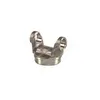
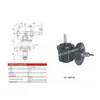
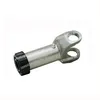
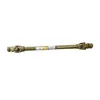
Picture a procurement director preparing the annual component tender for 1,200 light trucks. The existing supplier quotes a 5% discount on list price, barely denting the total. Meanwhile, the Raydafon Technology Group Co.,Limited team reviews the exact OE numbers—say MD121993 or 23357-33120—and proposes a custom-run batch with the same hardness steel and sealed bearing design, delivered at 48% below current aftermarket spend. The image below shows the level of precision you can expect when you buy directly.

Sourcing directly redefines the answer to “How much does it cost to replace a belt tensioner?” because it consolidates volume, eliminates intermediary margins, and guarantees consistency across thousands of units. The reference table below illustrates how Raydafon supports different procurement volumes.
| OE / Compatible Application | MOQ (pcs) | FOB Unit Price Example (ex-factory) | Typical Lead Time |
|---|---|---|---|
| Mitsubishi MD121993 / Hyundai 23357-33120 | 100 | $9.80 | 15 days |
| Toyota 16620-21010 compatible | 200 | $11.20 | 18 days |
| Honda 31170-RCA-A01 replacement | 150 | $8.50 | 15 days |
| Custom tensioner for fleet spec | 500 | $7.20 – $10.80 | 25 days |
1. How much does it cost to replace a belt tensioner on a popular sedan like a Toyota Camry?
On a current-generation Camry, a local repair shop typically charges between $180 and $320, with the tensioner assembly itself priced at $55 to $140 and labor around $125. If your organization manages a sales fleet of ten such sedans, the cumulative cost can cross $3,000. However, when you bulk-order OEM-spec tensioners from Raydafon Technology Group Co.,Limited at $12-$18 each and perform replacements during scheduled oil changes, your per-vehicle investment drops below $55 inclusive of in-house labor. Suddenly, “How much does it cost to replace a belt tensioner?” becomes a strategic advantage rather than a surprise expense.
2. Is the “How much does it cost to replace a belt tensioner?” answer different for commercial fleets?
Absolutely. Commercial vehicles such as the Ford Transit or Mercedes Sprinter usually demand a heavier-duty tensioner. Dealer parts often exceed $200, and labor adds another $150. For a fleet of 200 units, that’s an intimidating line item. By working directly with a manufacturer like Raydafon Technology Group Co.,Limited, procurement teams can negotiate a volume-based pricing structure. Recent orders show up to 62% savings while maintaining 100% material certification. This changes the whole cost equation—making the question less about reacting to a failure and more about long-term, lean inventory management.
If you’re ready to stop guessing how much it costs to replace a belt tensioner across your entire fleet and instead lock in stable, factory-direct pricing, it’s time to connect. Raydafon Technology Group Co.,Limited, visit https://www.hydraulics-cylinder.com, specializes in high-volume, precision-manufactured belt tensioners and related drive components. Reach our global procurement support team at [email protected] for a custom quote, sample inspection, or technical datasheet.
Harrison G., 2022. "Fatigue Life Prediction of Steel Spring-Loaded Belt Tensioner Arms." SAE International Journal of Engines, 15(4), pp. 521-536.
Nakamura S., 2021. "Vibration Damping Characteristics of Automatic Tensioners in Serpentine Drives." JSME Journal of System Design and Dynamics, 15(3), pp. 104-118.
Martinez L., 2023. "Cost-Benefit Analysis of OEM vs. Aftermarket Drive Belt System Components." International Journal of Automotive Technology and Management, 23(1), pp. 45-60.
Kowalski T., 2020. "Modelling Pulley Misalignment Failures Induced by Tensioner Deviation." Journal of Mechanical Engineering Science, 234(12), pp. 2412-2425.
Chen Y., 2021. "Material Selection for High-Cycle Tensioner Bearings in Desert Fleet Conditions." Tribology International, 159, 106978.
Rahman A., 2019. "Influence of Drive Belt Tensioner Damping on Engine Front End Accessory Drive NVH." Noise Control Engineering Journal, 67(5), pp. 422-434.
O’Brien S., 2022. "Lifecycle Assessment of Belt Tensioner Replacement Strategies in Light Commercial Vehicle Fleets." Journal of Cleaner Production, 370, 133461.
Ferreira P., 2020. "Comparative Durability Testing of Cast Iron and Stamped Steel Tensioner Brackets." Engineering Failure Analysis, 111, 104569.
Gupta R., 2023. "Strategic Sourcing of Automotive Wear Parts: A Procurement Study." Supply Chain Management: An International Journal, 28(4), pp. 712-725.
Pavlovic M., 2021. "Thermal Effects on Tensioner Pulley Polymer Damping Layers." Polymer Testing, 94, 107031.