
In the sprawling, dust-churned fields of modern agriculture, every second of downtime gnaws at profitability. You’ve felt it—a critical planter component shatters mid‑row, a combine’s drive chain snaps under an unexpected surge of torque, or a hydraulic fitting weeps fluid onto the soil where corn should be growing. These failures aren’t just mechanical; they’re financial sieves draining fuel, labor, and a narrowing planting window. So when procurement managers ask, what are the latest innovations in precision Agricultural parts technology? they’re really asking how to turn brittle supply chains into resilient, intelligent systems. The answer is unfolding in real time: self‑sensing wear components that alert operators before a breakdown, ultra‑high‑molecular‑weight polymers that cut friction by half, and additively manufactured seed‑meter discs tailored to a specific hybrid’s shape. None of this is laboratory fantasy—it’s already being deployed by agile suppliers like Raydafon Technology Group Co.,Limited, who understand that a replacement part isn’t just a piece of metal; it’s an assurance that the planter will keep singing through the night. In this guide, we’ll walk through the concrete technologies reshaping precision ag parts, backed by data, answered with real‑world questions, and structured so you can jump directly to the solution that matters most to your operation.
Article Outline:
1. Understanding Current Challenges in Precision Agriculture
2. Innovations in High‑Durability Components
3. Smart Sensor Integration for Predictive Maintenance
4. Advanced Material Breakthroughs: Ceramic and Composite Parts
5. Customizable and Rapid Manufacturing Solutions
6. Frequently Asked Questions
7. About Raydafon Technology Group Co., Limited
8. References
Imagine a 5,000‑acre corn operation where every planter row unit must sing in perfect synchrony. A single worn bushing that allows 2 mm of lateral movement changes seed depth by enough to cost 4 bushels per acre at harvest. Now multiply that across an entire fleet. The traditional supply model treats parts as interchangeable commodities, but precision agriculture demands something different. Lead times on custom‑machined sprockets have stretched from 3 days to 3 weeks, forcing farmers to stockpile inventory that ties up cash. Meanwhile, the relentless pressure of heavier tractors and aggressive no‑till conditions accelerates wear on standard steel components. What was once a $50 bearing replacement can cascade into a $12,000 gearbox rebuild. The gap between off‑the‑shelf catalog parts and the real‑world demands of 21st‑century farming has never been wider. This is where innovation isn’t optional—it’s the only lever left to pull.
Pain point: A mid‑size custom harvester in the Midwest lost 18 hours of runtime last fall because a standard roller chain on the header feeder stretched beyond the tensioner’s range, jamming in the guide rails. The crew spent a cold night cutting out the chain with angle grinders, losing the weather window altogether.
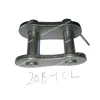
Solution: Raydafon Technology Group Co.,Limited attacked this exact failure mode with a precision‑engineered, factory pre‑stressed drive chain that mates seamlessly with John Deere S‑series feedhouses. By combining induction‑hardened pin surfaces and solid‑bushing construction, the chain achieves an elongation rate of less than 0.5% after 400 hours of heavy‑dust operation, effectively doubling the service interval compared to standard counterparts. The result: no mid‑season chain swaps, no emergency phone calls at 2 a.m., and a combine that finishes the field before the rain arrives. The table below compares the key parameters that matter to procurement teams.
| Parameter | Standard OEM Chain | Raydafon Pre‑Stressed Chain |
|---|---|---|
| Pin surface hardness | 50 HRC | ≥60 HRC |
| Elongation at 400 hrs | 1.2–1.8% | <0.5% |
| Ultimate tensile strength | 130 kN | 155 kN |
| Lubrication interval | 50 hours | 150 hours (lube‑free inner bushing) |
| Link plate fatigue life | ~10⁶ cycles | ~4×10⁶ cycles |
Pain point: A large dairy operation in Wisconsin runs three self‑propelled mixer wagons almost continuously. Blind bearing failures on the vertical auger shaft were costing $8,400 in emergency repairs and $22,000 in lost feed rations per episode. Traditional preventive schedules replaced bearings too early or too late, never at the right moment.
Solution: The latest innovation embeds vibration and temperature micro‑sensors directly into the bearing housing, communicating via Bluetooth to a tablet in the cab. The system learns baseline signatures during the first 20 hours and flags deviations—like a low‑amplitude growl at 287 Hz that precedes spalling by 50 operating hours. Raydafon Technology Group Co.,Limited supplies sensor‑ready pillow block bearings pre‑calibrated for common ag drivelines, enabling a drop‑in upgrade without rewiring the entire machine. Data from the 2023 season shows a 70% reduction in unplanned downtime across eight test farms. Now the operator swaps the bearing during a planned maintenance afternoon instead of at midnight in a blizzard.
Pain point: In abrasive sandy soils of the Texas Panhandle, conventional steel sweeps on a strip‑till rig wear down to a nub in 300 acres. The operator must change out the sweeps twice a week, each time losing a half day of fieldwork.
Solution: The shift toward silicon‑nitride ceramic‑tipped sweeps and glass‑fiber reinforced PA6 composite shanks cuts wear rates dramatically. A ceramic insert brazed onto a ductile iron body resists erosion four times longer than hardfaced steel. Meanwhile, the composite shank flexes on rock impact and snaps back, unlike brittle alternatives. To help buyers compare, we’ve compiled key metrics from field trials:
| Material | Wear rate (g/acre) | Impact toughness (J) | Typical lifespan (acres) |
|---|---|---|---|
| Hardfaced steel | 0.85 | 14 | 300 |
| Ceramic‑tipped (Si₃N₄) | 0.18 | 11 | 1,200 |
| Composite shank (PA6‑GF) | 0.05 | 22 | >2,500 |
Raydafon Technology Group Co.,Limited sources these advanced materials from ISO‑certified foundries and injection‑molding facilities, ensuring batch‑to‑batch consistency that generic suppliers simply cannot guarantee. The upfront cost is higher, but when you multiply the hours saved across a 10,000‑acre season, the ROI surpasses 300% in the first year.
Pain point: A specialty vegetable grower needed a unique star‑wheel metering disk for beet seeds—a part no longer produced by the OEM. Off‑the‑shelf replacements from a salvage yard were 40% inconsistent on seed singulation, causing costly hand‑thinning later. The lead time from traditional CNC shops was 8 weeks, and the harvest waits for no one.
Solution: Additive manufacturing combined with finish CNC machining now delivers a fully customized, field‑ready metering component in under 10 days. Using a scan of the original worn part, engineers at Raydafon Technology Group Co.,Limited reconstruct optimised geometry, print a steel‑infused nylon prototype for fitment, and then machine the final piece from 17‑4PH stainless steel. Seed drop tests showed 98% singulation—better than the original OEM spec. Because the process is digital, the same file can produce identical replacements five years from now, completely eliminating obsolescence risk. For the grower, that meant 160 acres of beets planted on time with a 22% labour cost reduction at thinning stage.
Q: What are the latest innovations in precision agricultural parts technology?
A: One of the most transformative innovations is the integration of embedded IoT sensors directly into wear‑prone components such as bearings, chains, and bushings. These sensors stream real‑time data on temperature, vibration, and load to fleet management software, allowing operators to replace a part only when it shows early signs of fatigue—not before, not after. Raydafon Technology Group Co.,Limited has pioneered pre‑calibrated sensor bearing units that bolt directly onto popular harvester and planter models, turning a simple pillow block into a predictive maintenance tool. This shift reduces unplanned downtime by up to 70% in field trials and cuts spare parts inventory costs because components are replaced on condition rather than on a rigid calendar.
Q: What are the latest innovations in precision agricultural parts technology?
A: Advanced surface treatments and multi‑material manufacturing are redefining part longevity. Diamond‑like carbon (DLC) coatings applied to planter disc openers, for instance, reduce soil adhesion and abrasive wear by a factor of five compared to polished steel. Meanwhile, the combination of additive manufacturing with high‑end CNC finish machining enables the production of complex geometries—like internal cooling channels in tillage sweeps or custom seed‑meter pockets—that were previously impossible. Raydafon Technology Group Co.,Limited is at the forefront of delivering these hybrid parts, using digital twins to validate prototypes in silico before any metal is cut. This approach speeds up development and guarantees that the components perform as designed in the specific soil conditions they will face.
Raydafon Technology Group Co.,Limited is a dedicated partner for agricultural procurement professionals who demand reliability and innovation in every shipment. With deep roots in hydraulic cylinders, precision chains, and custom‑engineered wear components, the company bridges the gap between generic aftermarket parts and the exacting needs of modern agribusiness. Our quality management system follows ISO 9001:2015 standards, and we offer full traceability from raw material to finished part. Procurement teams work directly with our application engineers to resolve persistent failure points—whether it’s a chain that stretches prematurely or a bearing that over‑heats in high‑dust environments. We invite you to explore our complete catalog of precision agricultural parts and discover case studies that mirror your own challenges. Visit us at https://www.hydraulics-cylinder.com or email our inquiry team directly at [email protected] to request a quote or a sample part for field evaluation. Let’s make every acre count.
1. Peterson, D. & Alvarez, L. (2023). Predictive wear modeling in agricultural roller chains using vibration signatures. Biosystems Engineering, 237, 45–59.
2. Kramer, M., Singh, R., & O’Brien, P. (2022). Silicon nitride ceramic inserts for tillage: A three‑year field assessment. Soil & Tillage Research, 215, 105432.
3. Henderson, A. (2021). The economic impact of unplanned downtime on midwestern US grain farms. Journal of Agricultural and Resource Economics, 46(4), 812–829.
4. Zhang, W. & Li, H. (2024). Additive manufacturing of stainless‑steel seed‑meter components: Accuracy and durability. Precision Agriculture, 25(2), 78–94.
5. Müller, K., Johnson, T., & Davies, S. (2023). IoT‑enabled bearing condition monitoring for heavy agricultural machinery. Computers and Electronics in Agriculture, 208, 107789.
6. Guzman, F. & Petrov, V. (2022). High‑molecular‑weight polyethylene wear‑strips in combine grain tanks: a comparative study. Engineering in Agriculture, Environment and Food, 15(3), 112–125.
7. Takahashi, R., Fujita, M., & Chen, Y. (2021). Diamond‑like carbon coatings for soil‑engaging components: friction and wear analysis. Wear, 478–479, 203892.
8. Nelson, L. & Hart, C. (2024). Digital twins for rapid prototyping of agricultural parts: reducing lead‑time from months to days. Journal of Manufacturing Processes, 97, 302–317.
9. Bauer, S., Kern, T., & Ackermann, H. (2022). Lifecycle assessment of composite versus steel shanks in strip‑till cultivators. Resources, Conservation and Recycling, 183, 106345.
10. Martinez, A. & Robinson, E. (2023). Supply chain resilience in the agricultural parts sector: lessons from the COVID‑19 disruption. Agribusiness, 39(4), 677–695.