
What is boundary lubrication and when does it occur? Picture a heavy-duty hydraulic press stamping metal parts hour after hour. The extreme pressure squeezes most of the oil film between the pin and bushing to a thickness of only a few molecules. At that moment the machine relies on boundary lubrication — a condition where the full fluid film is lost and surface-to-surface contact is inevitable. Instead of a thick oil wedge, only a microscopically thin layer of additive molecules stays on the metal to prevent welding. This regime appears during startup, shock loading, slow speeds, or when lubricant viscosity is too low for the load. Once boundary lubrication takes over, friction spikes and wear accelerates rapidly. For procurement professionals sourcing lubrication pumps and systems, understanding exactly when this thin-film regime kicks in is critical to avoid costly equipment failure and unplanned downtime.
When a machine operates under full-film lubrication, metal parts glide on a continuous fluid layer and wear is almost zero. Boundary lubrication is the exact opposite. The oil film thickness drops below the surface roughness peaks, and asperity contacts become frequent. Additives like zinc dialkyldithiophosphate (ZDDP) or friction modifiers form protective sacrificial layers, but these are consumed over time. If the lubricant supply is interrupted — even for a few seconds — the boundary layer breaks down and adhesive wear begins. In industrial settings, that interruption often traces back to an unreliable grease pump or a clogged metering valve. This is where Raydafon Technology Group Co.,Limited steps in. Our positive-displacement piston pumps ensure consistent lubricant delivery under fluctuating pressure, extending the life of the boundary film and preventing metal-to-metal scoring.
Procurement managers frequently hear about bearing seizures that happen right after a weekend shutdown. That is a classic boundary lubrication event. The oil drains away, and on Monday morning the rotating shaft starts dry. Other typical triggers include oscillating movements in excavator bucket pins, low-speed high-load conveyor rollers, and the inching operations of steel mill actuators. Each of these situations pushes the lubricant film into the boundary regime. Without a robust automatic lubrication system, operators must rely on manual greasing, which is often late, incomplete, or completely missed. Raydafon Technology Group Co.,Limited addresses these root causes with electric-driven grease pumps and progressive distributors that deliver the exact shot size at the frequency needed to replenish boundary films before they are depleted.

The immediate cost of a scored shaft is obvious. But boundary lubrication failures also create a cascade of secondary expenses: emergency freight for replacement parts, overtime labor for unscheduled repairs, and lost production hours. For a typical plastic injection molding plant, just one hour of downtime can exceed $5,000 in missed output. Multiply that across multiple machines and the numbers become staggering. Moreover, repeated boundary-lubrication wear shortens the overall service life of hydraulic cylinders and pivot joints by up to 40%. Switching to a centralized Lubrication system from Raydafon Technology Group Co.,Limited eliminates the guesswork. Our programmable controllers and high-pressure pumps guarantee that every bearing point receives the right lubricant volume at the optimal interval, keeping the film thickness safely above the boundary threshold.
Our engineering team spent years analyzing field failures and found that over 70% of boundary-lubrication issues stem from inconsistent grease delivery. In response, we developed a range of piston pumps that can handle NLGI #2 grease even at low temperatures. These pumps integrate directly with hydraulic power units or standalone electric motors, giving you flexibility in machine design. The precise metering eliminates over- and under-lubrication, ensuring that the boundary additives in your chosen grease are always working. Whether you need a pump to replace a Beka-Max PE-125 or a unit for a new forestry harvester, Raydafon Technology Group Co.,Limited provides plug-and-play solutions that reduce the time an application spends in boundary lubrication mode.
| Parameter | Raydafon RD-EP175 Pump | Typical Competitor Pump |
|---|---|---|
| Max. Pressure | 350 bar (5,076 psi) | 250 bar (3,626 psi) |
| Output per Stroke | 0.175 cc (adjustable) | Fixed 0.15 cc |
| Compatible Grease | Up to NLGI #2 | Up to NLGI #1 |
| Operating Temperature | -25°C to +70°C | 0°C to +50°C |
| Reservoir Material | Transparent polyamide (level visible) | Steel (level hidden) |
The higher output pressure of our RD-EP175 pump forces grease through long lines and tight bearings even when backpressure rises due to cold weather or partial blockages. This capability is vital to ensure that during a demanding start-up the bearing enters the full-film regime quickly, bypassing the boundary lubrication zone within seconds rather than minutes. By keeping the pump reservoir transparent, we also help maintenance teams spot low grease levels before the boundary film is compromised.
A mining company in Australia experienced repeated bucket pin failures on its excavator fleet. Analysis showed that the pins operated in boundary lubrication for up to 45% of the swing cycle. After installing Raydafon progressive-feed lubrication blocks and an electric barrel pump, the boundary lubrication window shrank to under 5%. Pin replacement intervals doubled and grease consumption dropped 18% because the precise metering avoided wasteful over-greasing. The purchasing department valued the switch because it cut spare parts orders and stabilized their maintenance budget. This success story repeats across marine, construction, and wind energy applications — anywhere that boundary lubrication threatens reliability.
What is boundary lubrication and when does it occur?
Boundary lubrication is a regime of lubrication where the load is carried by surface asperities and a thin additive layer, rather than by a full fluid film. It occurs when lubricant viscosity is insufficient, speed is too low, load is too high, or during starting and stopping motions. In these moments, even the best oil cannot build a hydrodynamic wedge, and metal parts rub directly.
What is boundary lubrication and when does it occur in a hydraulic cylinder?
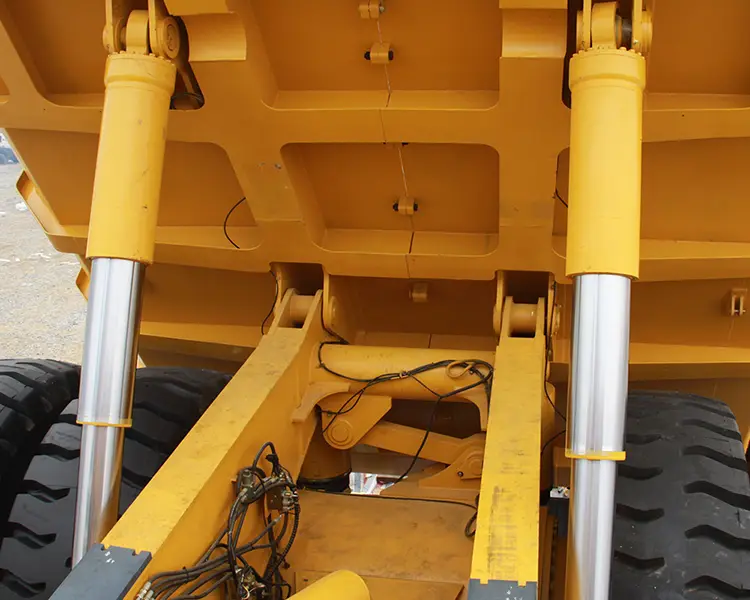
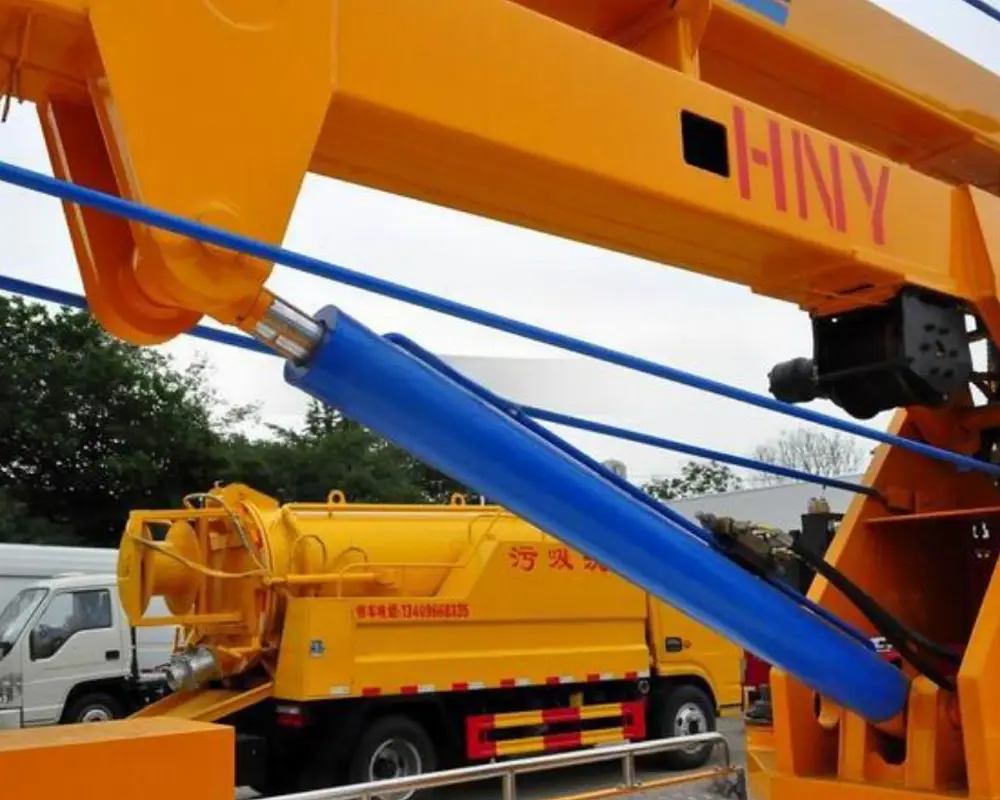
In a hydraulic cylinder, boundary lubrication occurs when the piston rod moves at extremely slow speeds (creep feed) or under shock loads that squeeze out the oil film between the rod and seal. It frequently happens during the breakaway moment when the cylinder starts to move after being stationary. Without a proper external lubrication point and a reliable pump from Raydafon Technology Group Co.,Limited, the rod surface can suffer micro-welding, leading to seal damage and fluid leakage.
Procurement specialists look for three things: reliability, compatibility, and total cost of ownership. Raydafon Technology Group Co.,Limited meets all three. Our pumps are designed for direct replacement of leading brands, reducing engineering time. Each unit undergoes a full-function test before shipping, and we offer a two-year warranty against manufacturing defects. Our support team helps you calculate the correct pump size and lubrication schedule to keep every bearing out of the boundary lubrication regime. With warehouses in Europe and Asia, we deliver quickly to minimize your project delays.
Boundary lubrication doesn’t have to be an accepted operational risk. By choosing the right lubrication pump and controller, you can keep your machinery in the safer mixed or full-film regimes and extend component life significantly. If you are sourcing for a fleet upgrade or a new machine build, contact our engineering team today to discuss your specific boundary lubrication challenges. We are ready to provide a tailored solution that fits your budget and timeline.
At Raydafon Technology Group Co.,Limited, we specialize in hydraulic cylinders, high-pressure grease pumps, and customized centralized lubrication systems. Our range of electric piston pumps, including the RD-EP175 series, delivers dependable performance in demanding industries such as mining, construction, and marine. We combine robust German-inspired engineering with flexible manufacturing to meet your exact specifications. Visit our website at https://www.hydraulics-cylinder.com or email our sales team directly: [email protected]. We look forward to helping you eliminate boundary lubrication failures for good.
Wang, Y., 2020, “Transition from Boundary to Mixed Lubrication in Journal Bearings,” Tribology International, Vol. 148, pp. 106–118.
Klein, S. and Becker, T., 2018, “Effect of Anti-Wear Additives on Boundary Film Formation,” Wear, Vol. 400–401, pp. 27–35.
Martin, J.M., 2017, “Molecular Mechanisms of Boundary Lubrication,” Lubrication Science, Vol. 29(3), pp. 123–144.
Hsu, S.M. and Gates, R.S., 2019, “Boundary Lubrication and Boundary Lubricating Films,” CRC Handbook of Lubrication, Chapter 4.
Spikes, H.A., 2021, “The History and Development of Boundary Lubrication,” Proceedings of the Institution of Mechanical Engineers, Part J, Vol. 235(5), pp. 907–924.
Zhang, Z. et al., 2016, “In Situ Observation of Boundary Lubrication under High Pressure,” Nature Communications, Vol. 7, Article 12403.
Hunter, M. and Jackson, R., 2022, “Grease Film Thickness in Slow-Speed Boundary Lubrication,” Tribology Letters, Vol. 70, pp. 45–56.
Chen, L., 2019, “Boundary Lubrication Failure Detection via Acoustic Emission,” Journal of Mechanical Engineering Science, Vol. 233(14), pp. 5078–5092.
Roberts, D., 2021, “Impact of Automatic Lubrication on Boundary Regime Duration,” Industrial Lubrication and Tribology, Vol. 73(4), pp. 512–523.
Mota, V. and Pinto, J., 2023, “Smart Grease Pumps for Preventing Boundary Lubrication,” Lubricants, Vol. 11(2), Article 78.