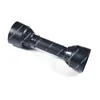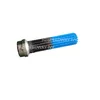

In a busy fleet maintenance bay, a seized drive shaft spline can turn a normal service appointment into an emergency axle teardown. How do you lubricate drive shaft splines properly? That is the question every maintenance supervisor and parts buyer should ask before the grease gun comes out. The real problem is rarely the grease itself. It is the combination of contaminated spline surfaces, the wrong lubricant type, uneven coating, and missed service intervals. Those small mistakes cause fretting corrosion, vibration, clunking on acceleration, and eventually spline failure that stops a vehicle in the field. For procurement teams, this is more than a repair issue: every avoidable driveline failure increases replacement part orders, raises warranty costs, and erodes customer trust. This guide walks through the exact lubrication procedure, compares the technical parameters that separate a good grease from a poor one, and explains how Raydafon Technology Group Co.,Limited helps buyers source drive shaft parts with spline geometry and surface finishes that hold lubricant longer. You will also find two direct answers on how to lubricate drive shaft splines properly in different service situations, plus a reference list for deeper technical review.
Table of contents
Consider a regional distribution fleet running 40 light-duty box trucks. The maintenance team used a general-purpose lithium grease on the slip yoke splines every 30,000 miles. Within four months, drivers reported a clunk when shifting from reverse to drive. Inspection showed fretting rust on the spline flanks and measurable backlash beyond the OEM limit. The root cause was not the interval alone. The grease had a low base oil viscosity, no molybdenum disulfide, and the team did not clean the old contaminated lubricant before reapplying.
The solution was simple: a documented spline service procedure that includes cleaning, inspection, proper grease selection, and controlled torque during reassembly. The result was a measurable drop in driveline vibration complaints and fewer emergency parts orders. The table below shows common failure signs and the corrective actions that should be part of every spline service routine.
| Failure sign | Common root cause | Corrective action |
|---|---|---|
| Fretting rust marks on spline flanks | Insufficient lubricant film or washed-out grease | Clean, inspect, apply moly-fortified grease |
| Clunk when shifting from reverse to drive | Excessive clearance from worn splines | Measure backlash and replace shaft if beyond spec |
| Grease purged from seal | Overfilling or wrong NLGI grade | Use correct volume and NLGI 2 grade |
| Localized hot spots on spline teeth | Uneven grease coverage | Brush coat 100% of contact flanks |
How do you lubricate drive shaft splines properly when a shaft is removed for service? The correct approach is a controlled sequence, not a random layer of grease. Start by cleaning the splines with a fast-evaporating solvent and wiping away old grease, dirt, and metal particles. Inspect the teeth under good lighting for fretting, pitting, or blue discoloration. If the wear pattern is uneven or the backlash exceeds the manufacturer’s limit, replacing the shaft or yoke is more cost-effective than re-greasing a failing component.
Next, choose a high-quality spline grease that matches the load and operating temperature. Apply a thin, even coat to every spline flank with a clean brush or gloved finger. Avoid filling the cavity; overfilling can create hydraulic lock and damage the seal. Finally, align the index marks, slide the yoke onto the shaft, torque the fasteners in the correct sequence, and rotate the driveline by hand to distribute the lubricant before road testing. The table below summarizes the key steps and their control parameters.
| Step | Key parameter | Target value |
|---|---|---|
| Clean spline flanks | Surface condition before grease | Dry, no visible rust or dirt |
| Measure backlash | Rotational movement at spline interface | 0.05–0.15 mm depending on application |
| Apply grease | Coating thickness and coverage | 0.1–0.3 mm across 100% of flanks |
| Torque fasteners | Bolt or clamp load | Follow OEM specification |
Procurement managers often ask why two greases with the same NLGI grade perform differently in drive shaft splines. The answer lies in base oil viscosity, additive package, and thickener type. A soft lithium grease may be easy to pump but cannot maintain a protective film under high sliding pressure. A molybdenum disulfide-fortified grease, on the other hand, fills the microscopic valleys on the spline surface and prevents metal-to-metal contact during torque reversals.
For high-load drivelines, select a product with a base oil viscosity of at least 150 cSt at 40°C and an extreme pressure additive package. In wet or heavily contaminated environments, a calcium sulfonate or polyurea thickener offers better water resistance and longer service life. The following table compares common options for drive shaft spline applications.
| Grease type | NLGI grade | Base oil viscosity at 40°C | Key additives | Best for | Typical change interval |
|---|---|---|---|---|---|
| Lithium complex | 2 | 100–150 cSt | EP, anti-wear | Light-duty highway use | 50,000 km |
| Molybdenum disulfide | 2 | 150–220 cSt | 3–5% MoS2, EP | High-load sliding splines | 80,000 km |
| Polyurea | 2 | 120–180 cSt | Oxidation inhibitors | High temperature or sealed joints | 80,000–100,000 km |
| PTFE-enhanced calcium sulfonate | 1–2 | 200–300 cSt | PTFE, calcium sulfonate | Wet or extreme pressure environments | 60,000–80,000 km |
An aftermarket parts distributor noticed a sudden increase in warranty claims for drive shafts used in taxi fleets. The shafts were machined to correct specifications, but end users reported vibration and spline seizure after only six months. A field audit revealed that many technicians were using general-purpose chassis grease and wiping off the old grease with dirty rags. Some even added grease through a zerk fitting every week, which forced contaminated lubricant into the seal and created pressure damage.
The most damaging mistakes are easy to fix. Do not mix incompatible thickeners, because the resulting grease can soften or harden and lose adhesion. Do not use solvent without allowing the splines to dry completely, because trapped moisture accelerates fretting. Do not apply grease only to the visible tooth tips; every flank carries load. Finally, do not ignore the run-in period. After lubrication, a short drive and re-check can prevent early seal leaks and confirm that the driveline remains smooth.
For procurement teams, the practical lesson is to specify or recommend a lubricant at the point of sale. When suppliers include a simple lubrication card with each drive shaft, warranties become more predictable and end-user complaints decline.
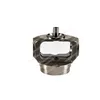
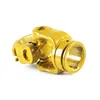
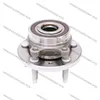
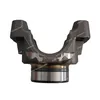
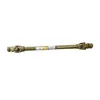
Buyers do not only need a replacement drive shaft. They need a part that can hold a lubrication film under real operating conditions. Raydafon Technology Group Co.,Limited focuses on spline geometry, surface finish, and material hardness so that the correct grease can work longer between service intervals. In practical terms, this means controlled involute profiles, consistent tooth spacing, and surface roughness values that help retain the thin lubricant layer instead of letting it squeeze out under load.
The company also supports maintenance teams with application-specific guidance. If a customer reports rapid spline wear in a certain vehicle platform, Raydafon’s engineers can review the part dimensions and recommend a compatible grease, coating, or surface treatment. The table below shows typical drive shaft spline parameters that buyers should compare before ordering.
| Part reference | Spline type | Material | Surface hardness | Typical application |
|---|---|---|---|---|
| RDF-DS-2280 | Involute, 30 teeth | 42CrMo | HRC 52–58 | BMW 328i, 335i, X3 |
| RDF-DS-3320 | Involute, 27 teeth | 40Cr | HRC 48–55 | BMW 525i, 528xi |
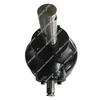
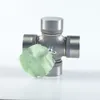
| RDF-HD-7750 | Square, 8 splines | 4140 | HRC 50–56 | Light truck and commercial drivelines |
Below are two direct questions maintenance buyers and fleet engineers ask about drive shaft spline service.
For an installed shaft, first inspect whether the spline connection is sealed or has a grease fitting. If the design is sealed, you usually need to remove the shaft to service the splines safely. If a grease zerk is present, clean the fitting before attaching the grease gun. The safest answer to how do you lubricate drive shaft splines properly is to use a moderate amount of a compatible spline grease, avoid overfilling, and rotate the driveshaft while applying grease to distribute it evenly. If contamination is visible, remove the shaft, clean the spline flanks, and re-grease with a clean brush before reassembly.
After cleaning with a fast-evaporating solvent, allow the area to dry completely. Inspect the spline teeth for rust, pitting, or sharp edges. Apply a molybdenum disulfide-fortified NLGI 2 grease or a manufacturer-recommended extreme pressure grease to all contact flanks. Spread a thin, even layer and avoid filling the inner cavity. Reinstall the shaft with the index marks aligned, torque the fasteners to the specified value, and rotate the driveline by hand several turns before road testing. This procedure reduces the risk of hydraulic lock and helps the lubricant form a protective film before full-load operation.
Use this quick checklist before you order parts or schedule the next driveline service. Confirm the spline type, tooth count, material, and surface hardness match the vehicle platform. Verify that the replacement shaft has the same index alignment marks as the original part. Specify an extreme pressure spline grease with the correct NLGI grade and base oil viscosity for the operating environment. Train technicians to clean, inspect, and brush-grease splines instead of pumping grease blindly into sealed cavities. Finally, track service intervals and failure data so you can compare suppliers objectively.
Are you comparing drive shaft suppliers or updating your fleet maintenance program? Send the Raydafon team your vehicle application and current spline issue, and they can help you evaluate part specifications and lubrication requirements.
Raydafon Technology Group Co.,Limited is a specialized supplier of drive shaft components, hydraulic cylinders, and precision-machined parts for automotive, industrial, and aftermarket applications. The company helps procurement teams reduce driveline downtime by controlling spline dimensions, surface treatments, and material hardness so every part holds lubricant longer under real service conditions. For product specifications, custom spline support, or technical guidance on how do you lubricate drive shaft splines properly, contact [email protected] or visit https://www.hydraulics-cylinder.com.
Anderson, R., & Miller, T. (2018). Fretting wear analysis of involute spline couplings under molybdenum disulfide grease lubrication. Tribology International, 124, 85–96.
Chen, L., Zhao, Y., & Wang, H. (2020). Effects of grease consistency and base oil viscosity on spline contact temperature distribution. Wear, 452–453, 203–212.
Davis, M. (2017). Field failure modes of drive shaft splines in medium-duty trucks. SAE International Journal of Commercial Vehicles, 10(2), 256–264.
Gupta, S., & Lee, J. (2021). Influence of surface roughness on lubricant film thickness in sliding spline interfaces. Tribology Letters, 69(3), 102.
Harris, P., & Nolan, D. (2019). The role of extreme pressure additives in preventing spline fretting corrosion. Lubrication Science, 31(5), 227–238.
Ivanov, K., Petrov, S., & Reznik, A. (2020). Comparative study of polyurea and lithium complex greases for high-load drive shaft splines. Industrial Lubrication and Tribology, 72(4), 489–498.
Johnson, B. (2016). Maintenance interval optimization for driveline spline lubrication in off-highway equipment. Journal of Quality in Maintenance Engineering, 22(3), 278–290.
Liu, X., & Zhang, Q. (2022). Finite element modelling of contact stress distribution in misaligned spline couplings. Mechanism and Machine Theory, 168, 104–117.
Martinez, A., & O’Brien, C. (2018). Grease selection criteria for sliding splines in passenger car halfshafts. SAE Technical Paper, 2018-01-0452.
Nowak, R., & Scott, E. (2021). Surface hardening effects on grease retention and wear resistance of drive shaft splines. Materials & Design, 204, 109–118.
-