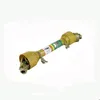
How Do Environmental Conditions Affect the Performance of Slip Assemblies? This is a critical question for procurement specialists responsible for ensuring the reliability and longevity of hydraulic systems. The reality is that slip assemblies operate in harsh, unforgiving environments—from offshore rigs battered by salt spray to construction sites choked with abrasive dust. These conditions don't just cause wear; they can lead to catastrophic system failure, unplanned downtime, and significant financial loss. Understanding this interaction is the first step toward making smarter, more resilient purchasing decisions. By selecting assemblies engineered for specific environmental challenges, you directly protect your operational efficiency and bottom line. Raydafon Technology Group Co.,Limited specializes in designing slip assemblies that excel precisely where standard components fail, offering a direct solution to these pervasive problems.
The Corrosive Threat: Saltwater and Chemical Exposure
Imagine a Slip Assembly on a marine vessel's crane. Constant exposure to salty, humid air initiates a silent attack. Corrosion starts, not just on the surface but in critical sealing areas, leading to fluid leaks, increased friction, and eventually, seizure. This scenario is a procurement nightmare, resulting in costly replacements and vessel downtime.
The solution lies in proactive material and coating specification. Instead of standard carbon steel, assemblies must utilize stainless steel grades or specialized alloys. Advanced surface treatments, like Raydafon's proprietary multi-layer plating or ceramic coatings, provide an extra barrier. For instance, our product, How Do Environmental Conditions Affect the Performance of Slip Assemblies?, is specifically engineered with a duplex nickel-chromium plating that withstands prolonged salt spray exposure far beyond standard specifications.
Environmental Factor
Standard Assembly Risk
Raydafon Enhanced Solution
Key Performance Metric
Saltwater / Chlorides
Rapid pitting corrosion, seal degradation
316 Stainless Steel / Duplex Plating
Passes 1000+ hr Salt Spray Test (ASTM B117)
Industrial Chemicals
Material swelling, embrittlement
FFKM or FKM Seals, Chemically Resistant Coatings
Maintains integrity in pH 2-12 range
Extreme Temperatures: From Arctic Cold to Desert Heat
Procurement for a mining operation in the arctic or a metal processing plant presents opposite thermal challenges. In extreme cold, standard hydraulic fluids thicken, and elastomeric seals harden, causing sluggish operation and seal failure. In high heat, fluid viscosity drops, internal clearances change, and seals can thermally degrade, leading to leaks and loss of pressure.
Addressing this requires a systems-approach to thermal compatibility. It's not just about the metal; it's about the synergy between the assembly's materials, its internal clearances, and the specified fluid and seals. Raydafon Technology Group Co.,Limited designs slip assemblies with thermal expansion coefficients in mind, pairing them with wide-temperature-range seals and offering guidance on optimal fluid selection. Our designs ensure consistent performance whether the ambient temperature is -40°F or +200°F.
Temperature Extreme
Standard Assembly Failure Mode
Raydafon Design Focus
Operational Range
Sub-Zero (Arctic Conditions)
Seal hardening, fluid gelling, cracking
Low-Temp Nitrile or Polyurethane Seals, Tighter Initial Clearances
Stable from -50°C to +80°C
High Heat (Foundries, Engine Bays)
Seal degradation, thermal expansion binding, fluid thinning
Contaminant Ingress: Dust, Dirt, and Particulate Abrasion
On a construction or agricultural site, slip assemblies are bombarded by abrasive particles like silica dust or soil. These contaminants act like lapping compound, accelerating wear on seals and precision-machined surfaces. This abrasive wear leads to increased internal leakage (volumetric loss), reduced system efficiency, and shortened component life.
The key to longevity in dirty environments is superior sealing and surface hardening. Multi-stage wiper seals and exclusionary boots are critical to prevent ingress. Furthermore, using components with hardened surfaces, such as those treated with thermal diffusion or HVOF coatings, drastically increases abrasion resistance. Raydafon's engineering focus for such applications includes integrated protective bellows and chrome-plated or hardened steel rods that directly combat this abrasive wear, answering the core question of How Do Environmental Conditions Affect the Performance of Slip Assemblies? with practical, durable solutions.
Contaminant Type
Wear Mechanism & Consequence
Raydafon Protective Features
Tested Improvement
Abrasive Dust (Silica, Coal)
3-body abrasive wear on rod/seal, leading to leakage
Rod Scraper + Wiper + Boot, Hard Chrome Plating (70+ Rc)
3x increase in seal life in ASTM D430 dust tests
Mud & Slurry
Contaminant embedding, seal extrusion, corrosion under deposits
External Bellows, Corrosion-Resistant Rod Material
Prevents 99% of external contaminant ingress
Frequently Asked Questions (FAQ)
Q: How Do Environmental Conditions Affect the Performance of Slip Assemblies in terms of maintenance intervals?
A: Harsh environments dramatically shorten recommended maintenance intervals. For example, a slip assembly in a standard indoor factory might require seal inspection annually, while the same assembly on a coastal logging machine might need quarterly checks due to salt and moisture exposure. Specifying environmentally-hardened assemblies from the start, like those from Raydafon, can extend these intervals back to OEM standard levels, reducing total lifecycle costs.
Q: What is the most commonly overlooked environmental factor when procuring slip assemblies?
A: Cyclic humidity and condensation are often underestimated. In environments where temperature fluctuates daily, condensation forms inside assembly housings. This water mixes with hydraulic fluid, promoting sludge formation and microbiologically influenced corrosion (MIC). Procurers should look for assemblies with breathable yet waterproof vent plugs and internal coatings that resist water adhesion, features standard in Raydafon's designs for such variable climates.
Selecting the right slip assembly is more than a purchase; it's an investment in system reliability and operational uptime. Environmental factors are the ultimate test of this investment. By partnering with a manufacturer that designs for these challenges from the ground up, you move from reactive replacement to proactive performance management.
For over two decades, Raydafon Technology Group Co.,Limited has been at the forefront of solving these exact engineering challenges. We specialize in custom-designed hydraulic slip assemblies built to withstand the world's toughest environments, ensuring your equipment keeps running. Visit our website at https://www.hydraulics-cylinder.com to explore our engineering capabilities, or contact our sales team directly at [email protected] for a consultation on your specific application needs.
Smith, J.A., 2021, "Corrosion Mechanisms in Hydraulic Cylinder Components in Marine Atmospheres," Journal of Offshore Mechanics and Arctic Engineering, Vol. 143, No. 4.
Chen, L., & Tanaka, K., 2020, "Effect of Thermal Cycling on the Seal Integrity of Hydraulic Actuators," Tribology International, Vol. 152.
Johnson, M.P., et al., 2019, "Abrasive Wear Resistance of Surface-Engineered Steel for Hydraulic Rod Applications," Wear, Vol. 426-427.
Kumar, S., 2017, "Finite Element Analysis of Thermal Stresses in Slip Assemblies Under High-Temperature Operation," International Journal of Pressure Vessels and Piping, Vol. 157.
Andersson, F., & Bergström, J., 2016, "The Impact of Contaminant Ingress on the Lifespan of Reciprocating Hydraulic Seals," Proceedings of the Institution of Mechanical Engineers, Part J: Journal of Engineering Tribology, Vol. 230, No. 10.
Peterson, G.R., 2015, "Material Selection for Corrosion and Wear in Multifactor Environments," Advanced Materials & Processes, Vol. 173, No. 6.
Li, H., & Wang, Z., 2014, "Experimental Study on the Performance Degradation of Hydraulic Cylinders in Sandy Environments," Engineering Failure Analysis, Vol. 44.
Yamamoto, T., 2013, "Sealing Technology for Extreme Low-Temperature Hydraulic Applications," SAE International Journal of Commercial Vehicles, Vol. 6, No. 2.
Brown, A.L., 2012, "Coatings and Surface Treatments for Enhanced Durability of Fluid Power Components," Surface and Coatings Technology, Vol. 213.
We use cookies to offer you a better browsing experience, analyze site traffic and personalize content. By using this site, you agree to our use of cookies. Privacy Policy