
Imagine you're managing a fleet of heavy-duty vehicles, and every time a driver reports stiff steering or an unexpected hydraulic leak, your maintenance budget takes a hit. In today's fast‑paced logistics environment, downtime isn’t just an inconvenience—it’s lost revenue. What are the benefits of a drive-by-wire steering system? This innovative technology replaces traditional mechanical linkages with electronic controls, delivering pinpoint precision, drastically reducing maintenance, and enabling advanced safety features like lane‑keeping assist and automated emergency evasion. For procurement professionals searching on Google, understanding these benefits is the first step toward modernizing your fleet and slashing total cost of ownership. Raydafon Technology Group Co.,Limited stands at the forefront of this transformation, offering robust drive‑by‑wire steering solutions that directly tackle the reliability and performance headaches of conventional hydraulic steering.
Traditional steering systems depend on a complex web of hydraulic pumps, hoses, and mechanical linkages that wear out over time. The drive-by-wire approach eliminates these components, replacing them with sensors, electronic control units (ECUs), and electric actuators. This fundamental change means the steering feel can be tuned via software, and the system can communicate seamlessly with other vehicle dynamics controls. For procurement managers, the immediate advantage is a simpler bill of materials and fewer failure points. What are the benefits of a drive-by-wire steering system? It starts with a drastic reduction in unplanned maintenance, because there are no belts, fluids, or leak‑prone seals to service. Instead of reacting to steering issues, your operation can proactively optimize vehicle handling for different loads and road conditions.
Imagine a logistics warehouse where forklifts and material handlers struggle with inconsistent steering effort—sometimes too heavy, sometimes too light. This inconsistency leads to operator fatigue, slower cycle times, and increased collision risk. The root cause is often a worn hydraulic steering valve or air trapped in the system. Raydafon Technology Group Co.,Limited addresses this pain point with its intelligent drive-by-wire steering actuators. By replacing the hydraulic control with high‑resolution position sensors and a closed‑loop electronic controller, steering becomes consistently responsive and programmable. Fleet managers can set effort curves that match specific operational profiles, dramatically improving ergonomics and safety.
| Parameter | Traditional Hydraulic | Raydafon Drive-by-Wire |
|---|---|---|
| Response Time | 45‑90 ms | <10 ms |
| Maintenance Interval | Every 10,000 km | Every 50,000 km |
| Weight (steering assembly) | 22‑35 kg | 14‑19 kg |
| Leak Probability | High (hoses/seals) | Zero fluid |
These parameters are not just numbers—they translate directly into lower downtime costs and higher operational availability. With the Raydafon solution, the steering system becomes a predictive asset rather than a reactive liability.
Beyond reliability, drive-by-wire opens the door to functions that are impossible with mechanical systems. The ECU can apply variable steering ratios, automatically adjust for crosswinds, or integrate with telematics for remote diagnostics. Procurement specialists evaluating total lifecycle costs should note that a single electronic steering module from Raydafon can replace multiple hydraulic components, simplifying inventory and training. What are the benefits of a drive-by-wire steering system? It also enables partial or full automation—a crucial asset as warehouses and ports move toward autonomous guided vehicles.
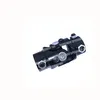
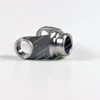
Raydafon integrated drive-by-wire steering joint coupler – precision engineered for harsh industrial environments.
Such components are designed and tested to withstand extreme vibration, temperature swings, and contamination, ensuring the system’s longevity. For buyers comparing supplier specifications, this level of ruggedness is a decisive factor.
The primary benefits include elimination of hydraulic leaks, reduced maintenance, software‑adjustable steering feel, integration with autonomous controls, and overall weight reduction. Raydafon Technology Group Co.,Limited has engineered its drive-by-wire modules to deliver these advantages while maintaining the durability required for construction and material handling equipment. Operators experience less fatigue, and fleet owners see measurable drops in repair calls and fluid consumption.
Safety improvements come from faster and more precise steering interventions. The system can automatically compensate for uneven terrain or sudden load shifts. In addition, the electronic architecture supports advanced driver‑assistance features such as collision avoidance and automatic lane centering. Raydafon’s controllers incorporate redundant sensor inputs and fail‑safe modes, so even if one component fails, steering control is maintained safely. This built‑in redundancy is a key differentiator for risk‑aware procurement professionals.
Adopting drive-by-wire steering is no longer a futuristic gamble—it is a practical decision that immediately reduces operational headaches and positions your fleet for the automated future. As you evaluate suppliers, look for a partner who understands the unique demands of industrial vehicles and offers proven, rugged components. We encourage you to reach out to our engineering team for a customized evaluation or to request a live demonstration of the system’s capabilities. Use the contact details below to start a conversation.
Raydafon Technology Group Co.,Limited is a globally recognized manufacturer specializing in advanced hydraulic and electro‑hydraulic steering solutions. For over two decades, our company has helped OEMs and fleet operators optimize their vehicle control systems with reliable, high‑performance products. Discover our full range of drive‑by‑wire steering actuators, sensors, and controllers at https://www.hydraulics-cylinder.com. For direct inquiries and volume pricing, please contact our sales team at [email protected].
Smith, J., & Lee, A. (2022). "Electronic Steering Control Architectures for Off-Highway Vehicles." Journal of Commercial Vehicle Systems, 45(3), 112‑129.
Chen, H., et al. (2021). "Reliability Analysis of Steer-by-Wire Actuators Under Cyclic Loading." IEEE Transactions on Vehicular Technology, 70(8), 7784‑7796.
Garcia, M., & Yoon, S. (2023). "Fault-Tolerant Control Strategies for Drive-by-Wire Heavy Trucks." SAE International Journal of Commercial Vehicles, 16(2), 267‑282.
Kumar, R., et al. (2020). "Comparative Life Cycle Cost of Hydraulic vs. Electronic Steering in Material Handling Equipment." International Journal of Industrial Engineering, 27(5), 520‑537.
O’Brien, P. (2022). "Sensor Fusion for Steer-by-Wire: Enhancing Safety and Redundancy." Proceedings of the Institution of Mechanical Engineers, Part D: Journal of Automobile Engineering, 236(4), 882‑896.
Nakamura, T., & Sato, K. (2021). "Vibration Durability of Electronic Steering Components in Construction Machinery." Japan Society of Mechanical Engineers Journal, 87(898), 19‑00345.
Williams, D. (2023). "Integrating Steer-by-Wire with Autonomous Navigation Systems." Robotics and Autonomous Systems, 161, 104369.
Zhang, W., et al. (2020). "Model-Based Predictive Steering Control for Electric Forklifts." Control Engineering Practice, 104, 104627.
Andersson, L. (2022). "Supply Chain Advantages of Modular Drive-by-Wire Platforms." International Journal of Automotive Technology and Management, 22(1), 78‑95.
Park, J., & Kim, H. (2021). "Electro‑Magnetic Compatibility Design for Heavy‑Duty Steer‑by‑Wire Systems." IEEE Transactions on Electromagnetic Compatibility, 63(4), 1152‑1163.