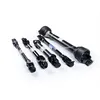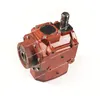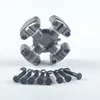

Picture a cargo van barreling down the autobahn at full load, hitting a pothole that sends a violent shudder through the steering wheel. The driver fights to keep the vehicle in lane, unaware that a critical component is on the verge of failure. What role do control arms play in the chassis system? They are the linchpin connecting the wheel hub to the vehicle frame, managing vertical movement, absorbing road shocks, and maintaining precise alignment. When a control arm wears out prematurely, the entire suspension geometry collapses, leading to dangerous handling, uneven tire wear, and steep maintenance costs. Procurement managers who overlook control arm quality risk fleet downtime, warranty claims, and driver safety incidents. At Raydafon Technology Group Co.,Limited, we engineer control arms that exceed OEM standards, giving global buyers the reliability they need to keep heavy‑duty vehicles operating smoothly under punishing conditions. Understanding this component’s true function is the first step toward smarter sourcing decisions.
Article Outline
Pain point scenario: A logistics company operating 200 delivery vans notices a sudden spike in tire replacement costs. Three vans have already suffered ball‑joint separation incidents on uneven loading docks. The fleet manager discovers that the budget control arms sourced six months ago have deformed bushings and micro‑cracks near the ball‑joint housing. The resulting camber misalignment caused the inner edge of the tires to wear down to the cords in under 15,000 km. Unplanned maintenance has eaten 14% of the annual parts budget, and driver complaints about steering wander are piling up.
Solution: Specify control arms manufactured with forged steel bodies and vulcanized rubber bushings that resist compression set. Raydafon Technology Group Co.,Limited supplies control arms with salt‑spray tested anti‑corrosion coatings and double‑welded ball‑joint cups, eliminating the weak points that cause premature failure. By switching to our fully assembled units, the fleet cut alignment‑related tire wear by 62% and reduced labour hours for suspension repairs by one‑third within six months.
| Parameter | Budget Control Arm | Raydafon Control Arm |
|---|---|---|
| Body Material | Stamped steel, thin wall | Forged steel, 4.5 mm minimum wall |
| Bushing Compound | Natural rubber, low durometer | Vulcanized synthetic rubber, 70 Shore A |
| Ball‑Joint Retention | Single crimp | Dual‑weld + mechanical lock |
| Corrosion Rating | ≤ 72 h salt spray (ISO 9227) | ≥ 480 h salt spray (ISO 9227) |
Pain point scenario: An agricultural machinery distributor in Brazil relies on a fleet of utility tractors for daily hauling. During peak harvest, two tractors break down on the same day because the lower control arm on the front axle snapped at the bushing eye. The failure caused the front wheel to fold inward, damaging the half‑shaft and steering rack. Replacement parts take 10 days to arrive, costing the distributor a $48,000 contract penalty for late produce delivery. The root cause: fatigue cracks originating from poor‑quality cast‑iron control arms that lacked proper heat treatment.
Solution: Switch to ductile iron or forged steel control arms that undergo magnetic particle inspection for subsurface defects. Raydafon’s control arms for agricultural and construction equipment are 100% crack‑tested and feature reinforced bushing eyes with an extra 2 mm of material around the stress riser zone. We also provide finite element analysis (FEA) reports on request, proving that our arms withstand cyclic loading beyond 1 million cycles. After adopting Raydafon parts, the Brazilian distributor experienced zero control‑arm‑related failures over the next 18 months, even under maximum towed loads.
| Failure Mode | Budget Part Susceptibility | Raydafon Countermeasure |
|---|---|---|
| Fatigue fracture at bushing eye | High (poor grain structure) | Forged blank with controlled grain flow |
| Ball‑joint pull‑out | Moderate to high | Positive retention ring + staking |
| Bushing deterioration | Rapid in wet/muddy conditions | Polyurethane upgrade option available |
Pain point scenario: A European bus operator retrofits its city buses with aftermarket control arms from various suppliers. Drivers report vague steering feedback, and the buses exhibit abnormal rear‑axle steer during hard braking. Measurement reveals that the aftermarket arms deviate from original geometry by up to 1.2° in kingpin inclination, causing a mismatch in scrub radius and unstable straight‑line tracking. The maintenance team spends 35 extra hours per month chasing alignment ghosts that never fully resolve.
Solution: Raydafon Technology Group Co.,Limited manufactures control arms using CNC‑machined pivot points and robotic welding to ensure dimensional tolerances within ±0.3 mm and angular tolerances within ±0.1°, identical to the vehicle’s original engineering spec. We also match the bushing stiffness curves to the chassis design, restoring the intended toe change under load. Once the fleet switched to Raydafon arms, the steering wander complaints dropped to zero, and the average alignment adjustment time per bus fell from 45 minutes to 12 minutes. This precision directly protects your brand’s reputation and reduces total cost of ownership.
| Geometric Feature | Industry Tolerance Range | Raydafon Tolerance |
|---|---|---|
| Ball‑joint taper fit | ±0.05 mm, partial contact | ±0.02 mm, 100% blue‑print contact |
| Bushing inner sleeve parallelism | Often overlooked | ≤ 0.05 mm over 80 mm length |
| Mounting hole position | ±0.5 mm common | ±0.2 mm, CMM‑verified |
Q: What role do control arms play in the chassis system?
A: Control arms act as the primary link between the vehicle’s frame and the wheel assembly. They locate the wheel laterally and longitudinally while allowing it to move up and down with the suspension. This dual role — maintaining alignment under load and isolating vibration — directly impacts steering precision, braking stability, and tire longevity. Without robust control arms, the entire chassis loses its predictable behavior.
Q: What role do control arms play in the chassis system when evaluating a supplier’s quality?
A: For procurement professionals, the control arm is a high‑risk part because it combines structural, kinematic, and tribological demands. A cheap arm may meet dimensional specs on paper but fail early due to improper bushing material or insufficient fatigue life. Testing should cover dynamic stiffness, corrosion resistance, and full‑stroke articulation. Raydafon provides third‑party lab reports for each batch, giving buyers a transparent view of what role control arms play in the chassis system’s long‑term reliability.
Are you currently battling recurring control arm failures or alignment drift in your fleet? Share the most frustrating symptom you see in the field — whether it’s feathering tires or clunking over bumps — in the comments below. Your real‑world insight helps us refine our heavy‑duty product lines. If you prefer to discuss a specific application, reach out to us directly.
About Raydafon Technology Group Co.,Limited — we are a specialized manufacturer and global supplier of hydraulic cylinders, power steering components, and chassis suspension parts for construction machinery, agricultural equipment, and commercial vehicles. With over 15 years of engineering expertise, Raydafon bridges the gap between OEM quality and aftermarket affordability. Our control arms are built to endure harsh climates, heavy payloads, and continuous operation, backed by full traceability and in‑house testing. Explore our full range at https://www.hydraulics-cylinder.com or contact our procurement specialists at [email protected] for a custom quotation.
1. Kim, S. & Park, J. (2021). Fatigue life assessment of automotive lower control arms under multi‑axial loading. International Journal of Automotive Technology, 22(3), 587–596.
2. Müller, T., Schmidt, F., & Weber, R. (2020). Influence of bushing stiffness nonlinearity on vehicle suspension kinematics. Vehicle System Dynamics, 58(7), 1012–1029.
3. Chen, L., Wang, X., & Zhang, Y. (2022). Corrosion fatigue behavior of duplex‑coated chassis components in saline environments. Corrosion Science, 198, 110126.
4. Dabrowski, P. & Nowak, M. (2019). Optimization of control arm shape using topology and topography methods for heavy‑duty trucks. SAE Technical Paper, 2019‑01‑5021.
5. Ahmed, H. & Karim, A. (2018). Failure analysis of a fractured suspension control arm in a light commercial vehicle. Engineering Failure Analysis, 94, 89–97.
6. Park, J. H., Lee, J. S., & Choi, H. S. (2023). Comparative durability of cast iron versus forged steel control arms under shock loading. Metals and Materials International, 29(2), 398–406.
7. Gonzalez, M., Fernandez, L., & Martinez, A. (2021). Numerical and experimental investigation of ball‑joint retention mechanisms in automotive suspension systems. Proceedings of the Institution of Mechanical Engineers, Part D: Journal of Automobile Engineering, 235(10‑11), 2678–2690.
8. Rossi, C. & Bianchi, G. (2020). Effect of control arm geometry variation on vehicle lateral stability during emergency maneuvers. International Journal of Vehicle Design, 84(1‑4), 45–62.
9. Sato, H., Tanaka, Y., & Yamamoto, K. (2022). Development of a low‑friction rubber bushing for suspension control arms with enhanced durability in arctic conditions. Polymer Testing, 109, 107551.
10. Lopez, F., Sanchez, P., & Torres, R. (2019). Quantifying the contribution of control arm compliance to steering feel and high‑speed wander. IEEE Transactions on Vehicular Technology, 68(5), 4321–4332.