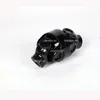
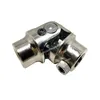
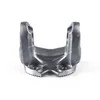
When a hydraulic cylinder repair job lands on your desk with a worn splined sleeve and a production line waiting, the last thing you need is a vague answer to the question: What Types of Splined Sleeves Are Available? Procurement teams often face a maze of tooth profiles, materials, heat treatments, and lead times, while a wrong choice can cause backlash, fretting wear, or a repeat failure within weeks. Picture a maintenance engineer holding a damaged piston rod spline, a purchasing manager comparing quotes, and an OEM engineer checking a retrofit drawing—all needing the same clarity: which sleeve type fits the torque, misalignment, speed, and space. Raydafon Technology Group Co.,Limited supports this decision with application-matched splined sleeves, from straight-sided and involute designs to helical, square, flanged, and split clamp versions. A delayed or mismatched part can stop a press, pump, or mobile machine, and expedited freight rarely fixes a design error. The fastest path is to know the available configurations, the data required for a quote, and the inspection points that protect your team from rework. This guide turns the question into a practical buying path: compare types, match loads, confirm materials, and inspect critical parameters before you place an order.
Pain point: A buyer receives a worn sample with no drawing, a supplier quotes a “standard spline,” and the maintenance team discovers the replacement does not fit the shaft or carry the load. This is common when a hydraulic cylinder is repaired under production pressure and the sleeve is treated as a commodity rather than a precision interface.
Solution: Classify the sleeve by tooth profile, mounting method, and duty before comparing price. Raydafon Technology Group Co.,Limited produces straight-sided, involute, helical, square, flanged, and split clamp splined sleeves, and the team can reverse-engineer from a sample when drawings are missing. The table below gives procurement teams the first-pass parameters needed to narrow the quote request.
Type
Tooth Form
Common Materials
Heat Treatment
Best For
Key Parameters
Straight-sided splined sleeve
Parallel straight teeth
1045, 4140, 42CrMo4
Induction hardened 45–55 HRC
Low-speed, high-torque repair
6–24 teeth; OD 30–180 mm; backlash 0.05–0.15 mm
Involute splined sleeve
Involute profile, 30° or 37.5°
4140, 42CrMo4, 20CrMnTi
Case carburized 58–62 HRC
Precise alignment, higher speed
Module 1–6; pressure angle 30°; runout ≤0.03 mm
Helical splined sleeve
Helical teeth, 15–30°
42CrMo4, 8620
Carburized and ground
Smooth torque transfer, reduced noise
Helix angle 15–30°; contact ratio >1.4
Square / rectangular splined sleeve
Square or rectangular teeth
1045, 40Cr
Induction hardened
Agricultural PTO, simple drives
Tooth width 6–20 mm; clearance 0.08–0.20 mm
Custom / flanged splined sleeve
Per drawing
42CrMo4, 17-4PH stainless
Nitrided or carburized
OEM retrofit, limited space
Flange concentricity ≤0.05 mm; custom length
Split / clamp splined sleeve
Straight or involute
4140, 4340
Quenched and tempered 28–32 HRC
Field repair without shaft removal
Clamp bolt grade 10.9; radial runout ≤0.04 mm
Matching Sleeves to Load, Misalignment, and Space
Pain point: Two sleeves can share the same tooth count but behave very differently in service. A low-cost straight-sided sleeve may be correct for a slow PTO drive, yet the same choice in a misaligned pump drive can create edge loading, backlash, and fretting wear. Purchasing teams often lack the operating data needed to challenge a low bid.
Solution: Build a short application profile before requesting quotes: torque, speed, misalignment, shaft diameter, available length, and repair method. Raydafon Technology Group Co.,Limited reviews these inputs with the buyer and recommends the tooth profile, backlash target, and inspection level rather than quoting a single generic part. Use the table below as a starting point for hydraulic cylinder and drive-train applications.
Application
Recommended Sleeve
Torque Range
Backlash Target
Inspection Focus
Hydraulic cylinder piston rod repair
Straight-sided or involute
0.5–12 kN·m
0.05–0.12 mm
Tooth wear, concentricity
Mobile hydraulic pump drive
Involute, ground
0.8–8 kN·m
0.03–0.08 mm
Profile error, contact pattern
Industrial valve actuator
Helical or involute
0.2–3 kN·m
0.04–0.10 mm
Helix angle, hardness
Agricultural PTO
Square / rectangular
1–6 kN·m
0.10–0.20 mm
Clearance, impact toughness
OEM retrofit
Custom flanged
Per drawing
Per drawing
Flange flatness, bore fit
Field repair without shaft removal
Split clamp
0.3–4 kN·m
0.06–0.15 mm
Clamp torque, runout
Materials and Heat Treatment That Extend Service Life
Pain point: A splined sleeve can pass a dimensional check and still fail early because the material or heat treatment does not match the load. Buyers see “hardened” on a quote, but the sleeve may have shallow case depth, soft core strength, or no corrosion protection for a wet environment. The result is tooth wear, cracking, or a repair that returns to the maintenance backlog.
Solution: Specify material, heat treatment, hardness range, and case depth together. Raydafon Technology Group Co.,Limited matches 1045, 4140/42CrMo4, 20CrMnTi, 8620, 4340, and 17-4PH to the duty, then confirms hardness and case depth on the inspection plan. The table below helps procurement teams compare common options without over-specifying cost into the part.
Material
Heat Treatment
Hardness
Corrosion Resistance
Typical Sleeve Use
1045
Induction hardened
45–55 HRC
Low
Straight-sided repair sleeves
4140 / 42CrMo4
Quenched and tempered + induction
28–55 HRC
Moderate
Involute and helical sleeves
20CrMnTi
Carburized
58–62 HRC
Low to moderate
High-load ground involute sleeves
8620
Carburized
58–62 HRC
Low to moderate
Helical sleeves
17-4PH
Aged
40–47 HRC
High
Stainless custom sleeves
4340
Quenched and tempered
30–38 HRC
Moderate
Split clamp sleeves
Incoming Inspection Checklist for Procurement Teams
Pain point: The purchase order says “involute spline, hardened,” but the receiving inspection has no target values. A sleeve with acceptable outer diameter can still have profile error, poor concentricity, or insufficient case depth, and those issues surface only after assembly. For a hydraulic cylinder repair, that delay is expensive.
Solution: Attach a measurable inspection plan to the purchase order. Raydafon Technology Group Co.,Limited supports buyers with material certificates, hardness reports, and dimensional records, and can align the inspection plan with the sleeve type and application. The table below lists practical checkpoints for incoming inspection and supplier review.
Check
Target
Method
Tooth profile error
≤0.02 mm
Involute tester or CMM
Concentricity
≤0.03 mm
Dial indicator or CMM
Backlash
0.03–0.12 mm by application
Feeler gauge or tooth contact check
Surface hardness
45–62 HRC by specification
Portable hardness tester
Case depth
0.6–1.2 mm
Microhardness traverse
Surface finish
Ra ≤0.8 µm
Profilometer
Crack inspection
No cracks
Magnetic particle or dye penetrant
Material certificate
EN 10204 3.1
Mill certificate review
FAQs: What Types of Splined Sleeves Are Available?
Q: What types of splined sleeves are available for hydraulic cylinder repair? A: The common choices are straight-sided, involute, helical, square, custom flanged, and split clamp splined sleeves. Straight-sided sleeves suit low-speed, high-torque repairs; involute sleeves handle better alignment and higher speed; helical sleeves smooth torque transfer; split clamp sleeves allow field repair without shaft removal. Raydafon Technology Group Co.,Limited reviews the cylinder load, misalignment, space, and repair method to narrow the type before quoting.
Q: How do I choose between straight-sided and involute splined sleeves? A: Start with misalignment and speed, not price alone. Straight-sided sleeves are cost-effective for slow, high-torque drives where some backlash is acceptable. Involute sleeves are preferred when alignment control, higher speed, or lower backlash is important, but they require tighter profile and runout inspection. Confirm tooth count, pressure angle, hardness, and backlash target, then ask Raydafon Technology Group Co.,Limited to match the sleeve to the application data.
Ready to turn a worn spline into a reliable repair? Raydafon Technology Group Co.,Limited manufactures and supplies application-matched splined sleeves for hydraulic cylinders, mobile equipment, and industrial drives. The team helps procurement and engineering teams confirm tooth profile, material, heat treatment, backlash, and inspection requirements before production, reducing fit-up risk and repeat downtime. Share your drawing, sample, or operating data with [email protected], or review hydraulic cylinder solutions at https://www.hydraulics-cylinder.com. Raydafon Technology Group Co.,Limited can quote standard and custom splined sleeves and support the inspection plan that keeps your line moving.
Research References
Wang, Y., & Liu, J., 2019, Fatigue life analysis of involute spline couplings under misalignment, Journal of Mechanical Science and Technology, 33(7).
Guo, Y., Chen, H., & Zhao, L., 2020, Wear mechanism of spline couplings in hydraulic cylinder applications, Tribology International, 146.
Hong, J., Park, S., & Lee, K., 2018, Load distribution in straight-sided spline couplings with manufacturing errors, Mechanism and Machine Theory, 121.
Li, X., & Zhang, H., 2021, Helical spline design for reduced backlash in heavy machinery, Proceedings of the Institution of Mechanical Engineers, Part C, 235(14).
Chen, W., Sun, Q., & Ma, R., 2017, Surface hardening and fatigue performance of splined sleeves, Surface & Coatings Technology, 321.
Smith, R. E., 2016, Spline coupling misalignment and fretting wear, Journal of Tribology, 138(4).
Park, S., & Kim, J., 2022, Influence of tooth profile on contact stress in splined sleeves, International Journal of Precision Engineering and Manufacturing, 23(3).
Zhao, Q., Liu, B., & Wang, F., 2020, Failure analysis of hydraulic cylinder piston rod spline, Engineering Failure Analysis, 115.
Brown, A. J., & Taylor, M., 2015, Design and testing of custom spline sleeves for off-highway equipment, SAE International Journal of Commercial Vehicles, 8(2).
Kumar, R., Singh, A., & Verma, P., 2023, Additive manufacturing of spline sleeves: dimensional accuracy and load capacity, Rapid Prototyping Journal, 29(5).
We use cookies to offer you a better browsing experience, analyze site traffic and personalize content. By using this site, you agree to our use of cookies. Privacy Policy