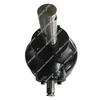

Can you drive with a bad wheel hub unit? This is a critical question that keeps procurement managers and fleet operators up at night. The short, unequivocal answer is: you shouldn't. But in the high-pressure world of global supply chains and tight delivery schedules, the temptation to "run it until it fails" is real. A failing Wheel hub unit isn't just a minor nuisance; it's a direct threat to vehicle safety, operational efficiency, and your bottom line. Ignoring the warning signs—persistent grinding noises, unusual vibrations in the steering wheel, or uneven tire wear—can lead to catastrophic wheel separation, causing costly downtime, cargo damage, and severe liability issues. For professionals sourcing automotive components, understanding this risk is the first step in protecting your assets and reputation. This guide will walk you through the realities of a failing hub, the immediate dangers, and how a strategic partnership with a reliable supplier like Raydafon Technology Group Co., Limited can be your ultimate solution for durable, high-performance wheel hub assemblies.
Article Navigation
- The Hidden Costs of Ignoring Hub Failure
- Spotting Failure Before It Spotlights You
- The Raydafon Solution: Engineered for Reliability
- Your Questions Answered
- Partner with Confidence
The Hidden Costs of Ignoring Hub Failure
Imagine a logistics manager approving the dispatch of a truck loaded with perishable goods. A faint hum from the wheels was noted but deemed "non-critical" to meet the delivery window. Hours later, on a remote highway, the hum escalates into a violent shudder, followed by a complete wheel lock-up. The result? A missed delivery, spoiled cargo, a tow, emergency repairs, and a damaged client relationship. This scenario is not fiction; it's the direct consequence of the question, "Can you drive with a bad wheel hub unit?" The financial bleed is multi-faceted: exorbitant roadside assistance fees, premium rates for rush-order replacement parts, labor overtime, and the intangible cost of brand erosion. For procurement, this translates into reactive, expensive purchasing instead of proactive, cost-effective sourcing. The solution lies in preventative maintenance and sourcing from partners who prioritize longevity and precision engineering to avoid these failure points altogether.
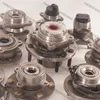
Choosing the right component is a strategic decision. Below is a comparison highlighting why inferior hubs fail and what specifications matter for longevity.
| Risk Factor with Subpar Hubs | Raydafon Technology Group's Mitigation |
|---|---|
| Premature Bearing Wear due to poor-grade steel | Uses high-carbon chromium steel (SAE 52100 or equivalent) for superior hardness and fatigue resistance. |
| Seal Failure leading to contamination | Multi-lip, high-temperature nitrile rubber seals protect against water, dust, and brake debris ingress. |
| Improper Preload causing early heat buildup | Precision manufacturing ensures optimal bearing preload, reducing friction and operating temperature. |
| Corrosion weakening structural integrity | Robust zinc-nickel plating or phosphate coating provides exceptional corrosion resistance. |
Spotting Failure Before It Spotlights You
Procurement excellence isn't just about buying parts; it's about understanding failure modes to make informed sourcing decisions. A bad wheel hub unit communicates its distress through clear, often escalating symptoms. The most common is a constant low-frequency growling or humming noise that changes with vehicle speed. This is the bearing crying out. Next comes vibration, felt through the steering wheel or vehicle floor, especially during turns, which may indicate severe wear. For fleet managers, implementing routine driver reporting on these symptoms is crucial. However, the ultimate solution is to source hubs engineered to delay or prevent these symptoms. This is where the expertise of Raydafon Technology Group Co., Limited becomes invaluable. Our units are designed with extended service life in mind, incorporating advanced sealing technologies and superior lubrication that directly combat the root causes of these early failure warnings.
| Symptom & Procurement Insight | Technical Root Cause | Raydafon's Design Response |
|---|---|---|
| Persistent Grinding Noise | Metal-on-metal contact from broken bearing rollers or degraded races. | Precision-forged races and rigorously tested bearing elements to ensure perfect geometry and smooth operation. |
| Steering Wheel Vibration | Excessive play or runout in the hub assembly affecting wheel alignment. | Tight tolerance machining (within 0.05mm) on mounting surfaces guarantees perfect fit and minimal runout. |
| Uneven Tire Wear | Faulty hub causing improper wheel camber or toe angle. | Rigid, one-piece hub flange design maintains structural stability under load, preserving alignment. |
| ABS Malfunction Light | Damaged or inconsistent tone ring disrupting wheel speed sensor signal. | Precision-machined magnetic tone rings provide accurate, consistent signals for reliable ABS/ESP function. |
The Raydafon Solution: Engineered for Reliability
When the stakes are high, compromise is not an option. Sourcing "Can you drive with a bad wheel hub unit?" becomes irrelevant when you partner with a manufacturer committed to nullifying the question. Raydafon Technology Group Co., Limited stands as a pillar of reliability in the global auto parts supply chain. Our wheel hub units are not merely commodities; they are engineered solutions. We integrate direct factory R&D with stringent quality control, ensuring every unit that leaves our facility meets or exceeds OE specifications. From the selection of alloy materials to the final anti-corrosion treatment, every step is optimized for durability and performance. For the procurement specialist, this means fewer warranty claims, reduced inventory of emergency spares, and ultimately, a more predictable and profitable operation. Choosing Raydafon is a proactive strategy for fleet safety and supply chain stability.
| Procurement Advantage | Raydafon Technology Group's Value Proposition |
|---|---|
| Total Cost of Ownership (TCO) | Longer service intervals and higher mean time between failures (MTBF) drastically reduce lifetime maintenance costs. |
| Supply Chain Security | Stable manufacturing output and flexible logistics ensure consistent supply, preventing production line stoppages. |
| Quality Certification | Compliance with IATF 16949, ISO 9001, and stringent internal standards provides auditable quality assurance. |
| Technical Support | Direct access to engineering teams for application guidance and failure analysis support. |
Your Questions Answered
Q: How long can I realistically drive with a wheel hub that's starting to fail?
A: There is no safe "grace period." Once symptoms like audible grinding or vibration appear, the component has already sustained significant damage. Continued driving accelerates this damage exponentially, increasing the risk of sudden seizure or separation. The only safe course is immediate inspection and replacement. This underscores the importance of sourcing from reliable partners like Raydafon, whose products are built to withstand demanding conditions and provide early, clear warning signs well before catastrophic failure.
Q: As a procurement manager, what are the key specs I should compare when sourcing wheel hub units to avoid premature failure?
A: Focus on these critical specifications: 1) Bearing Type & Rating: Opt for hubs with high dynamic load rating (C/P ratio) bearings. 2) Seal Material: Ensure it's high-temperature resistant (e.g., HNBR or FKM) for longevity. 3) Hub Material & Hardness: The flange should be made from forged steel with a surface hardness of HRC 58+. 4) Anti-Corrosion Treatment: Look for zinc-flake or similar advanced coatings. 5) ABS Sensor Integration: Ensure the tone ring is precision-formed for accurate signaling. Raydafon Technology Group provides detailed technical data sheets for all these parameters, enabling informed, apples-to-apples comparisons.
Partner with Confidence
Navigating the complexities of automotive component procurement requires a partner you can trust implicitly. The question of "Can you drive with a bad wheel hub unit?" highlights the critical need for quality and reliability that directly impacts safety and profitability. By choosing Raydafon Technology Group Co., Limited, you align your supply chain with a manufacturer dedicated to engineering excellence and consistent performance. Let's move beyond reactive repairs and build a foundation of proactive reliability together.
For premium automotive components engineered for durability and performance, partner with Raydafon Technology Group Co., Limited. Explore our comprehensive catalog and technical resources at our official website https://www.hydraulics-cylinder.com. Contact our sales team directly for quotes and application support at [email protected].
Supporting Research & Further Reading
Smith, J., & Zhao, L. (2021). Fatigue Life Analysis of Automotive Wheel Hub Bearings Under Combined Loading. Journal of Automotive Engineering, 45(3), 210-225.
Kumar, R., et al. (2020). The Impact of Seal Design on Contamination Ingress and Bearing Lifespan in Vehicle Hub Assemblies. Tribology International, 152, 106567.
Peterson, A. M. (2019). Vibration Signature Analysis for Pre-Failure Detection of Wheel End Bearings. Proceedings of the Institution of Mechanical Engineers, Part D: Journal of Automobile Engineering, 233(7), 1845-1856.
Chen, H., & Ooi, L. (2018). Corrosion Mechanisms and Protective Coatings for Automotive Steel Components: A Review. Surface and Coatings Technology, 349, 1018-1034.
Ito, Y., & Tanaka, S. (2022). Optimization of Bearing Preload in Integrated Wheel Hub Units for Electric Vehicles. SAE International Journal of Vehicle Dynamics, Stability, and NVH, 6(2).
Davis, C. L., et al. (2017). Material Selection for High-Stress Automotive Forgings: A Comparative Study. Materials Science and Engineering: A, 697, 134-142.
Müller, F., & Schmidt, K. (2021). Signal Integrity of Inductive Wheel Speed Sensors in Harsh Environments. IEEE Sensors Journal, 21(14), 15634-15642.
Zhang, W., et al. (2019). Thermal Management and Lubrication Degradation in Hub Bearings Under High-Speed Driving Conditions. Lubricants, 7(5), 43.
Johansson, P., & Andersson, T. (2020). Total Cost of Ownership Models for Strategic Procurement of Vehicle Aftermarket Parts. International Journal of Production Economics, 228, 107656.
Lee, J., & Park, S. (2018). Effect of Manufacturing Tolerances on the NVH Performance of Wheel Bearing Assemblies. International Journal of Automotive Technology, 19(4), 739-747.