Control arms connect the wheels to the vehicle's frame, allowing them to move up and down while maintaining proper alignment and stability. They absorb road shocks and ensure consistent tire contact, which is essential for handling and safety.
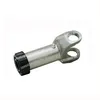
A drive shaft typically consists of a shaft tube, universal joints, and a slip yoke, with some designs also including a center support bearing. These components work together to transmit torque from the transmission to the differential while accommodating angular movement and length changes.
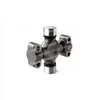
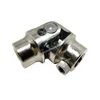
A universal joint is a mechanical coupling that transmits rotary power between two shafts not aligned in a straight line, allowing for angular misalignment while maintaining constant velocity rotation.
Explore how drive-by-wire steering enhances vehicle performance, safety, and design flexibility by replacing mechanical linkages with electronic controls.
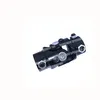
Learn the step-by-step process to properly install a universal coupling, ensuring correct alignment, secure fastening, and optimal performance in mechanical systems.
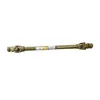
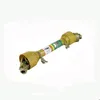
This article examines the common factors that lead to vibrations in a power take-off shaft assembly, such as misalignment, imbalance, worn components, and insufficient lubrication.
We use cookies to offer you a better browsing experience, analyze site traffic and personalize content. By using this site, you agree to our use of cookies.Privacy Policy


 01 2026-06
  25 2026-05
  22 2026-05
  15 2026-05
  14 2026-05
  07 2026-05